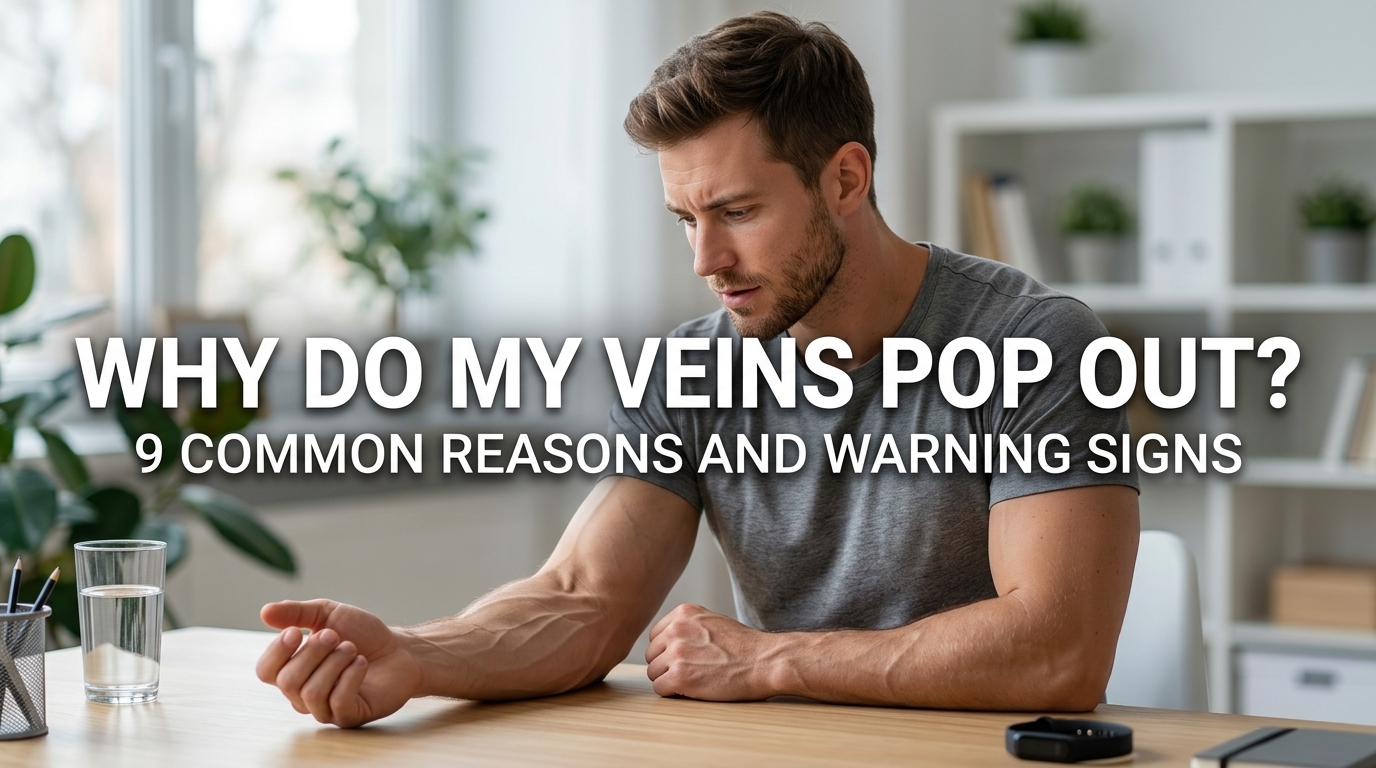
If you have suddenly noticed prominent veins on your hands, arms, legs, chest, or elsewhere, you may be wondering, why do my veins pop out? Usually, prominent visible veins are just your usual leg veins become more obvious to the naked eye because of: exercise the body’s percentage of fat or muscle tissue temperature even though you can appear veiny in any season the ageing process Your genes. A particular vein that you notice alone generally does not indicate anything serious. It’s more the combination: Where the vein occurs How new it is Does it change with your position or movement.
Is it causing pain, swelling, heat, redness, or other issues. Recognising this key difference will help you avoid two things: stressing unnecessarily about normal bodily changes not seeing a new leg vein concern that requires attention.
What Does It Mean When a Vein “Pops Out”?
When a vein appears to “pop out”, it generally means a superficial vein near the surface of the skin is becoming more noticeable, sometimes slightly larger or protruding a bit more than usual. Veins are vessels in the body that circulate blood back to your heart. There are both deep veins (located within muscle tissues) and superficial veins (closer to the surface of your skin).
Superficial veins tend to be more obvious and may stand out more in areas where your skin is very thin or lacks a thick layer of subcutaneous fat.
However, having a vein “pop out” isn’t necessarily indicative of a problem. For example, it’s very common for people to see their forearm veins pop out during or after lifting weights, as increased exercise increases circulation and exercises have a temporary effect on muscle tissue and the overall look of overlying vessels. This is in contrast to a varicose vein, which is a vein which appears twisted, bulging and larger than normal and is seen commonly in the leg area. Varicose veins are not always a cause for concern and most are without symptoms, though they can sometimes cause ache, swelling, and discomfort.
Why Do My Veins Pop Out? 9 Common Reasons
There is no single explanation for prominent veins. Several normal factors can make veins much easier to see.
1. Exercise Can Temporarily Make Veins More Visible
While often a telltale sign you’re working hard, one of the biggest culprits behind raised, visible veins is activity. The amount of blood going to your muscles may go up while you’re exercising and muscles may temporarily engorge while you’re in motion. Weightlifting in particular “ may cause visible veins, most noticeably in the hands and arms,” according to the Cleveland Clinic.
You may notice this effect after exercises such as:
- Weightlifting
- Push-ups
- Pull-ups
- Running
- Cycling
- High-intensity workouts
For many people, the veins become less noticeable after the body returns to its resting state.
This temporary pattern is generally different from a vein that remains persistently swollen, painful, red, or warm.
2. Lower Body Fat Can Reveal More Veins
Body Composition Also Impacts Visibility of Veins There’s also a body composition aspect to whether your veins are visible. Subcutaneous fat refers to the tissue between skin cells, the underlying structures, and underlying tissue. If there’s not a lot of tissue over superficial veins, these veins may be more easily observed.
One reason someone in peak condition, such as an athlete or recent weight loss, might suddenly notice their veins can be clearly seen is the low body-fat level.
This is one reason cited by Cleveland Clinic why the veins – especially in hands and arms – can be more conspicuous. However, not just any visible vein means high levels of fitness. Whether or not your veins can easily be seen depends on a wide range of factors, including heredity, individual skin characteristics, muscle build, how hydrated you are, and body composition.
3. Heat Can Make Veins Stand Out
Temperature can influence blood vessels.
When the body is exposed to heat, blood vessels near the skin can widen to help release heat. As superficial vessels become more prominent, veins may appear easier to see.
You might notice this after:
- A hot shower
- Exercising outdoors in warm weather
- Spending time in a hot environment
- A sauna or other heat exposure
A vein that becomes more visible in heat and then returns to its usual appearance after cooling is generally a different situation from a persistently enlarged vein associated with pain or swelling.
4. Aging Can Make Veins More Noticeable
Another reason your veins may be more prominent is because of aging. Over time, the skin thins a little and becomes less elastic. Cleveland Clinic says aging skin and decreased skin elasticity can both cause your veins to become more visible.
It’s not that the vein is having a new issue.
Rather, the material the vein is located within has altered enough to allow an otherwise buried, superficial vein to show.
5. Genetics Influence Vein Visibility
Certain individuals have more noticeable veins than others. Genes play a role in the structure of your vein walls, skin tone, body fat percentage, and if you are susceptible to certain vein conditions like varicose veins. Having a family history of vein conditions is another factor when it comes to varicose veins.
This is why you may have seen the veins on someone of a similar build and activity level versus the veins of someone who is the same as you that look a lot different.
In you have always had prominent veins and they are not changing or causing you any symptoms you may also have this factor to blame.
6. Pregnancy and Hormonal Changes Can Affect Veins
Hormone changes and their effects on veins and blood flow Hormones, in fact, play a significant role. Women, of course, go through several periods of hormonal change. The changes and bodily processes the body goes through during pregnancy-and after birth-can contribute to the developing the over the legs.
The two main periods of hormonal shift in a woman that are thought to be responsible for many cases of varicose vein development; but some will go on to see changes at other times of hormonally-altered health and function.
However, any of the unusually-developed legs should be viewed carefully if coupled by any of these other types of symptoms . . .
7. Sitting or Standing for Long Periods Can Affect Leg Veins
Your leg veins have a tough job on their hands: pushing blood back up against the flow of gravity so it can reach the heart. In the case of our lower legs, muscles in those areas assist with the effort and unique one-way valves within the veins help the blood go in the right direction and not flow backwards. Unfortunately, vein valves may weaken or become damaged and that can allow blood to pool the pressure inside our leg veins and create conditions like varicose veins or chronic venous insufficiency.
You might notice:
- Leg heaviness
- Aching
- Swelling around the ankles
- Visible veins
- Symptoms that become worse after prolonged standing
Regular movement can help support normal circulation in the legs. Cleveland Clinic recommends movement breaks during long periods of sitting and notes that walking and ankle movement can support venous blood flow.
8. Varicose Veins Can Cause Persistent Bulging
A continuously swollen, ropey or knotted vein, especially in the leg, can be a varicose vein. “The valves inside a normal vein help push blood toward the heart.”But if valves weaken or malfunction, blood flow is backtracked, collecting and backing up in the vein, forcing it to bulge, ” Dr.
Cohen explains.
Color: These veins are usually dark blue or purple and can be seen through the skin. Symptoms: You may have no other symptoms than the vein itself, or you might notice achiness, heavy legs, itching, cramping, swelling, and skin alterations.
9. A Vein Problem Can Sometimes Be Responsible
While many common visible veins are harmless, other symptoms in new and visible veins can suggest an underlying issue. Vascular disease symptoms often consist of several of these, such as redness, swelling, warmth, painful and heavy skin, or visibly prominent veins, so symptoms of the vein are an important factor to weigh. If a vein becomes prominent with exercise, then recedes fairly quickly, a newly appearing vein that causes pain, a feeling of warmth or a red appearance, accompanied by swelling, it is more indicative of a potential vein problem.
Why Are My Veins More Visible After Exercise?
Perhaps the most frequent question asked in regards to visibly large veins.
Muscles need more blood supply during exercise. The physical pressures and surrounding conditions of the blood vessels also change during resistance training. While veins rise closer to the skin in prominent circulation they appear to rest just under the surface of the skin itself.
The Cleveland Clinic website also pinpoints extreme exertion/muscles development as responsible for prominently large veins on your arms and hands.
This vascular expansion is typically transient in appearance.
For instance, an impressive bulging vein might rise across your entire forearm during a bout of resistance training and by the time that part of the day was completed it was noticeably less prominent. This is quite different than a bulging vein that does not resolve throughout the day nor has accompanying pain or swelling.
Why Are My Hand Veins Suddenly More Visible?
Hand veins are naturally close to the skin, which makes them particularly easy to see.
They can become more noticeable with exercise, heat, lower body fat, aging, or changes in the tissue beneath the skin.
If both hands show similar changes without pain, redness, swelling, or other symptoms, the explanation is often benign.
A sudden change affecting only one hand or arm deserves more attention, especially if it is accompanied by swelling, discomfort, warmth, or discoloration.
Why Are the Veins in My Legs Popping Out?
Leg veins deserve a little more attention because gravity places greater demands on venous circulation in the lower body.
If leg veins become twisted, enlarged, or rope-like, they may represent varicose veins. Prolonged standing, aging, pregnancy, family history, and excess weight are among recognized risk factors.
Some people have visible leg veins without discomfort. Others develop symptoms such as:
- Aching or heaviness
- Swelling
- Itching
- Muscle cramps
- Skin discoloration
- Pain that worsens after prolonged standing
Persistent or worsening symptoms of poor leg circulation warrant medical evaluation rather than assuming the veins are simply cosmetic.
When Are Visible Veins Usually Not Concerning?
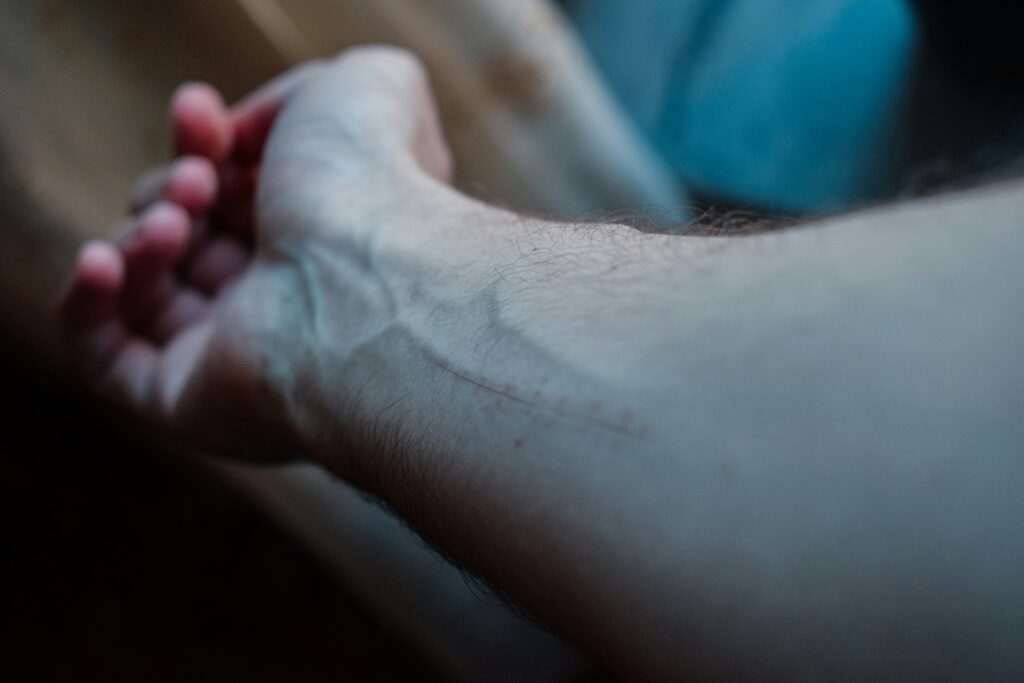
Prominent veins are more likely to be a normal variation when they:
- Have been present for a long time
- Appear on both sides similarly
- Become noticeable after exercise
- Become more visible in warm conditions
- Are not painful
- Are not associated with swelling
- Return toward their usual appearance after activity
This does not provide a diagnosis, but the pattern can provide useful context.
The important lesson is that visibility alone is not necessarily a sign of disease.
When Should You Be Concerned About Veins Popping Out?
A new or changing vein deserves medical attention when it is accompanied by other symptoms.
Cleveland Clinic recommends contacting a healthcare provider when bulging veins are associated with bleeding, discoloration or redness, pain, warmth, or swelling.
You should also seek medical evaluation if you develop:
- Sudden swelling in an arm or leg
- Significant or unexplained pain
- A vein that becomes hard or tender
- Redness or warmth around the vein
- Bleeding from a vein
- Persistent worsening of visible veins
- Skin sores or significant skin changes
MedlinePlus also recommends contacting a healthcare professional for painful or worsening varicose veins, sudden increases in pain or swelling, fever or redness of the leg, leg sores, bleeding, or a hard lump in a vein.
Could Prominent Veins Be a Blood Clot?
Visible vein-on its own, this indicates that you don’t have a blood clot. However, some blood clot conditions-e.g. An ache, swelling, warm feeling, or changes-may occur in affected limbs.
Deep vein thrombosis symptoms and warning signs can be dangerous as clots may spread to your lungs and cause a pulmonary embolism.
As its symptoms are similar to a variety of other conditions, it’s impossible for doctors to know that you simply have a vein showing. Should you notice that swelling and/or the aching develops acutely (especially in one limb) have it checked out. If you suspect an emergency may be imminent-sudden shortness of breath or chest pain in particular-get to your nearest emergency department immediately.
How Are Vein Problems Diagnosed?
A healthcare professional will usually begin with your medical history and a physical examination.
For suspected varicose veins or venous disease, the provider may examine the affected area while you are standing or sitting. If a deeper circulation problem or blood clot is suspected, a Doppler or duplex ultrasound may be used to evaluate blood flow.
This matters because visible veins are an observation, not a diagnosis.
An ultrasound can provide information that simply looking at the skin cannot.
What Can You Do to Support Healthy Veins?
If visible veins you can notice aren’t indicative of another problem general activities for the support of the circulatory system should help. Exercising, especially with the legs, should assist in keeping venous flow to the heart strong (walking or wiggling the feet around should increase this while the occasional walk helps decrease lengthy periods of immobility while seated). In the case of symptomatic varicose veins one might find medical recommendations to support the legs or use compression stockings given the person’s health status.
The selection should be a therapy in support of underlying condition rather than an attempt to make it seem if the veins are not visible.
No treat should be warranted or performed merely due to the visual representation ofnormalvisible veins.
Can You Prevent Veins From Popping Out?
Not always.
You cannot fundamentally alter your genetics, your age, the type of skin that you have, or your anatomy. However, there are some things that contribute to the development of vein issues that you can control.
Exercise, minimizing long periods of sitting or standing if possible, achieving and maintaining a healthy weight, and not smoking are generally good vascular health practices that help reduce your vascular risk. The Cleveland Clinic is among the sources that discusses this with respect to contributing to healthier veins and circulation.
Healthy circulation should be the overall target not the absence of all visible veins.
Common Misconceptions About Visible Veins
“Visible veins always mean I’m very fit.”
Not necessarily. Exercise and lower body fat can make veins more visible, but genetics, skin thickness, age, and anatomy also matter.
“If My Veins Suddenly Show, I Must Be Dehydrated.”
Dehydration is sometimes suggested as an explanation for visible veins, but prominent veins have many possible causes. Do not assume dehydration is responsible for a new vascular change without considering the overall pattern.
“Every bulging vein is a varicose vein.”
No. A normal superficial vein can become more visible temporarily after exercise or heat. Varicose veins are enlarged and often twisted or rope-like, most commonly in the legs.
“Visible veins mean there is a blood clot.”
Not by themselves. A clot requires medical assessment, and symptoms such as sudden swelling and pain are more important warning signs than vein visibility alone.
A Simple Way to Evaluate a New Visible Vein
Instead of immediately assuming the worst, consider five questions:
Where is it?
Arm and hand veins are often superficial and naturally visible. Persistent changes in the legs may require closer attention.
When did you notice it?
A vein that appears during exercise is different from one that suddenly becomes prominent without an obvious trigger.
Does it change?
Temporary visibility that settles after activity or cooling is generally different from persistent enlargement.
Does it hurt?
Pain, tenderness, warmth, redness, or swelling are important clues.
Is anything else changing?
Swelling, skin discoloration, sores, bleeding, or sudden symptoms should not be ignored.
This simple framework cannot diagnose a vein condition, but it can help you decide whether observation is reasonable or whether medical evaluation is appropriate.
Final Thoughts: Why Do My Veins Pop Out?
So, why do my veins pop out? In many situations, the answer is surprisingly ordinary. Exercise, lower body fat, heat, aging, genetics, and naturally superficial veins can all make veins more noticeable.
There are other conditions of your veins, or varicose vein conditions that persistent bulging veins particularly in your legs, may indicate. More important that how a visible vein appears to you; may not only be about the new or changing or painful and tender or swollen or warm or red or hard vein, but perhaps about there being other symptoms too that could correlate.
A new vein appearance if it worries you (and most crucially; if you get symptoms rapidly with a newly changing vein) will require the scrutiny of your healthcare provider who may advise further investigation with imaging such as the use of a Doppler ultrasound. Visible veins are in effect part of how the human body looks, the question may just be if this is an appearance which is perhaps just more pronounced-or if the new vein change indicates that you need to have your circulation examined in greater depth.

Frequently Asked Questions
1. Why do my veins pop out when I exercise?
Exercise increases blood flow and changes the pressure and muscle environment around superficial veins. Resistance training can make veins in the hands and arms especially noticeable. As your body returns to its resting state, the veins may become less prominent.
2. Why are my veins suddenly more visible than they used to be?
Changes in exercise habits, body composition, aging, heat exposure, and natural skin changes can all increase vein visibility. However, a sudden change accompanied by pain, swelling, redness, warmth, or discoloration should be evaluated by a healthcare professional.
3. Are visible veins a sign of dehydration?
Not necessarily. There are many reasons veins can become prominent, including exercise, lower body fat, heat, aging, and genetics. Visible veins alone are not enough to identify dehydration or another medical condition.
4. Why do the veins in my hands stick out?
Hand veins are close to the surface of the skin, so they can naturally be visible. Exercise, heat, lower body fat, and aging can make them even more noticeable.
5. When are bulging veins a warning sign?
Seek medical evaluation when a new or changing bulging vein is associated with pain, swelling, warmth, redness, bleeding, discoloration, or a hard lump. Sudden significant limb swelling or pain also warrants prompt assessment.
6. Can visible veins go away on their own?
Yes, if their prominence is related to temporary factors such as exercise or heat. Other causes, including varicose veins, may persist and sometimes require treatment if they cause symptoms.
7. What doctor should I see for unusually prominent veins?
You can start with a primary care professional, who can assess your symptoms and determine whether you need evaluation by a vascular specialist. If a vein problem is suspected, tests such as a Doppler ultrasound may be used to examine blood flow.
Conclusion
If you have been wondering why do my veins pop out, the answer is often related to normal changes such as exercise, heat, lower body fat, aging, genetics, or naturally superficial veins. Prominent veins are not automatically a sign of a health problem. Still, veins that suddenly pop up more, or that are associated with pain, swelling, redness, heat, discoloration or tenderness, should be checked out by a doctor. In other words, don’t just focus on looks; focus on changes. If that’s a lot of popping and popping persists or even intensifies, or includes other symptoms that make you nervous, a doctor can check for an underlying venous condition.