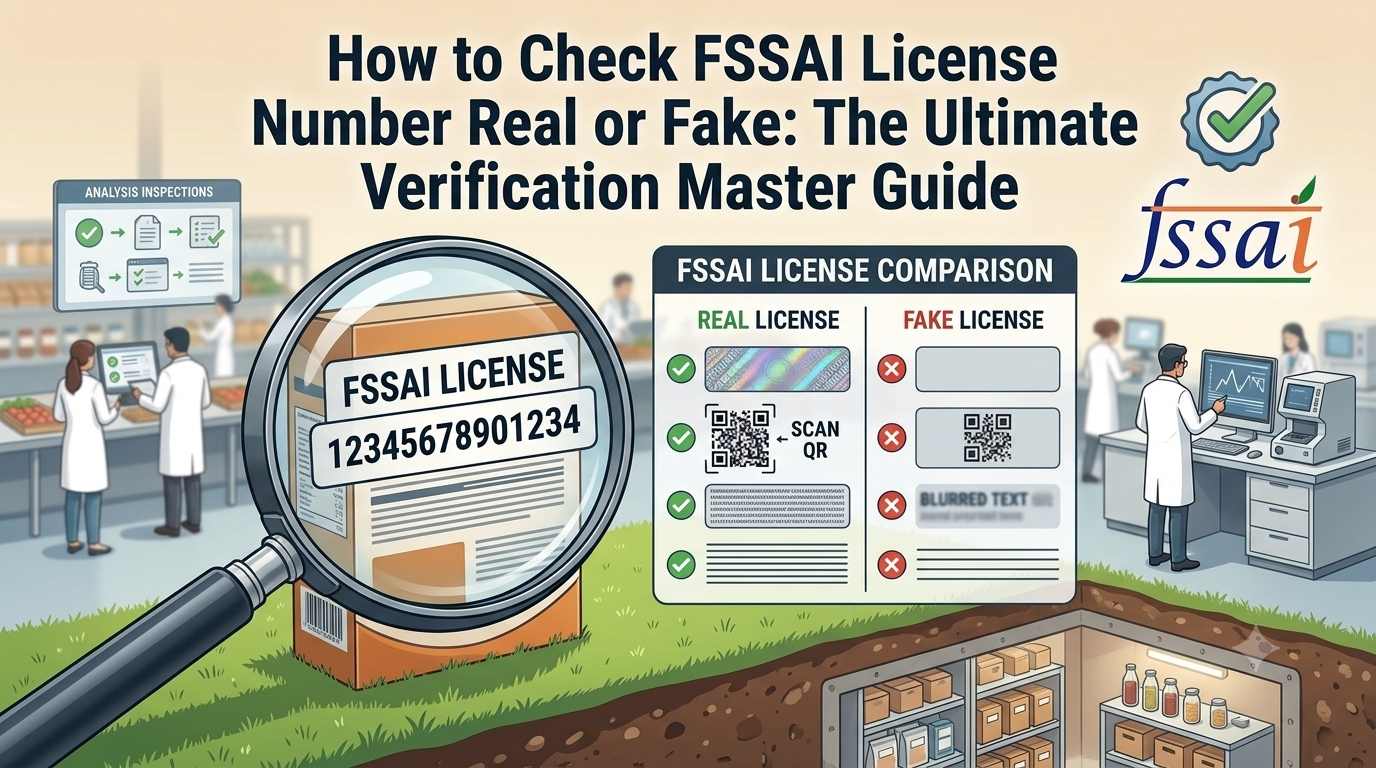
Food safety compliance in India hinges on the mandatory 14-digit permit issued by the Food Safety and Standards Authority of India (FSSAI). Whether buying daily groceries, purchasing packaged goods online, managing procurement for a supermarket chain, or running a restaurant, learning how to check fssai license number real or fake is a crucial protective skill that prevents health hazards and financial fraud.
Counterfeit products, adulterated items, and unauthorized food manufacturers frequently display fraudulent or expired numbers on product packaging to deceive buyers, making food product authenticity checks an important part of consumer protection. Furthermore, knowing how to check fssai license number real or fake safeguards public health and insulates retail networks, distributors, and e-commerce platforms from severe legal penalties under the Food Safety and Standards (FSS) Act, 2006.
1. Regulatory Framework: Understanding FSSAI Licensing in India
The Food Safety and Standards Authority of India operates under the Ministry of Health and Family Welfare, Government of India, with food safety regulations in India providing the broader framework for food businesses and consumers. Under Section 31 of the FSS Act, 2006, no person or business entity can manufacture, store, sell, distribute, or import any article of food without obtaining an FSSAI registration or license.
┌─────────────────────────────────────────────────────────────────────────┐
│ FSSAI THREE-TIER COMPLIANCE STRUCTURE │
├──────────────────────────┬──────────────────────┬───────────────────────┤
│ BASIC REGISTRATION │ STATE LICENSE │ CENTRAL LICENSE │
│ Turnover < ₹12 Lakh/yr │ ₹12 Lakh to ₹20 Cr/yr│ Turnover > ₹20 Cr/yr │
│ Petty Manufacturers/ │ Mid-Sized Processing,│ Large Manufacturers, │
│ Small Retailers/Hawkers │ Storage, Wholesalers │ Importers, E-Commerce │
└──────────────────────────┴──────────────────────┴───────────────────────┘
The regulations specify distinct categories based on operational scale and annual revenue:
- Basic FSSAI Registration: Applicable to petty food business operators (FBOs), small hawkers, temporary stallholders, and home-based food units with an annual turnover of up to ₹12 Lakh.
- State FSSAI License: Mandatory for mid-sized food processing units, storage facilities, transporters, distributors, and large restaurants operating within a single state with an annual turnover between ₹12 Lakh and ₹20 Crore.
- Central FSSAI License: Required for large-scale manufacturers, food importers, 100% export-oriented units, operators operating across multiple states, e-commerce platforms, and food businesses with an annual turnover exceeding ₹20 Crore.
Regulatory guidelines emphasize how to check fssai license number real or fake across retail and online sales channels because every tier generates a unique 14-digit identifier that maps directly back to the government’s central database.
2. Anatomy & Decoding of a 14-Digit FSSAI License Number
Before diving into online lookup procedures, understanding the structural composition of the 14-digit code reveals immediate visual red flags. Before diving into portal steps on how to check fssai license number real or fake, one must understand its structural code, which is systematically split into five distinct sections:
┌───┬───────┬───────┬───────────┬───────────────────┐
│ 1 │ 2 1 │ 2 3 │ 0 0 1 │ 1 2 3 4 5 6 │
├───┼───────┼───────┼───────────┼───────────────────┤
│Status│State │ Year │Registrar │ Unique FBO ID │
│ Code │ Code │ Code │ ID │ (License Serial) │
└───┴───────┴───────┴───────────┴───────────────────┘
Section-by-Section Breakdown
- Section 1 (1st Digit) — Registration Status Flag:
- Indicates whether the business holds a license or a basic registration.
- Digit 1 signifies a full FSSAI License (State or Central tier).
- Digit 2 signifies a Basic FSSAI Registration (for petty FBOs).
- Any number starting with 0, 3, or non-numeric characters is automatically invalid or fake.
- Section 2 (2nd and 3rd Digits) — State / Jurisdiction Code:
- Identifies the official state or Union Territory where the business premises are registered.
- For instance, 21 represents Maharashtra, 07 represents Delhi, 33 represents Tamil Nadu, and 00 or 10 often designates Central licensing authorities.
- An invalid state code (such as numbers above 38 or letters) signals potential forgery.
- Section 3 (4th and 5th Digits) — Registration Year Code:
- Represents the two-digit year in which the FBO was initially granted registration or licensing.
- For example, 23 indicates approval in the year 2023, while 18 indicates 2018.
- If a product manufactured recently lists a future year (e.g., 28) or an impossible past year (e.g., 92, preceding FSSAI’s establishment under the 2006 Act), it is fraudulent.
- Section 4 (6th, 7th, and 8th Digits) — Registrar / Authority Code:
- Identifies the specific registering officer or administrative jurisdiction issuing the license.
- Section 5 (9th to 14th Digits) — Unique FBO Serial Number:
- A six-digit unique identifier assigned specifically to that individual manufacturer, processor, or premises.
3. Method 1: Step-by-Step Online Verification via Official FoSCoS Portal
The primary step in how to check fssai license number real or fake involves navigating to the official FoSCoS web portal managed directly by FSSAI.
1.Access the Official FoSCoS Portal:Use only official .gov.in domains.
Open your web browser and navigate directly to the official Food Safety Compliance System portal. Avoid third-party verification tools or unofficial portals that may request payment or capture user data.
2.Locate and Select ‘FBO Search’:Located on the top navigation bar.
On the FoSCoS homepage header, click on the FBO Search (Food Business Operator Search) module. This public search feature gives access to the live government database without requiring user login credentials.
3.Enter the 14-Digit Number and Captcha:Double-check for transcript errors.
Input the exact 14-digit FSSAI license or registration number printed on the product packaging, invoice, or display board into the search field. Carefully complete the security Captcha code displayed on screen and click Submit.
4.Analyze the Returned Records & Status:Examine all business parameters.
Review the displayed result card. A valid entry will display the business operator’s name, registered unit address, license status (Active, Expired, Suspended, or Cancelled), validity period, and authorized food product categories.
How to Interpret FoSCoS Database Results
Mastering how to check fssai license number real or fake through FoSCoS ensures you verify whether the FBO status is Active and aligned with the physical product:
┌──────────────────────────────────────────────────────────────────────────┐
│ FOSCOS SEARCH RESULT EVALUATION │
├─────────────────────────┬────────────────────────────────────────────────┤
│ DISPLAYED FIELD │ WHAT TO VERIFY / RED FLAGS TO WATCH FOR │
├─────────────────────────┼────────────────────────────────────────────────┤
│ License/Reg Status │ Must show “Active”. If “Expired”, “Suspended”, │
│ │ or “Cancelled”, the product is illegal. │
├─────────────────────────┼────────────────────────────────────────────────┤
│ Company / FBO Name │ Must match the brand or manufacturer name │
│ │ printed on the packaging or invoice. │
├─────────────────────────┼────────────────────────────────────────────────┤
│ Premise Address │ Physical location on record must match the │
│ │ manufacturing site listed on product label. │
├─────────────────────────┼────────────────────────────────────────────────┤
│ Kind of Business (KOB) │ Must cover the specific activity (e.g., │
│ │ Manufacturing vs. Wholesaling vs. Repacking). │
├─────────────────────────┼────────────────────────────────────────────────┤
│ Permitted Product List │ Must explicitly list the specific food item │
│ │ category (e.g., Dairy, Spices, Beverages). │
└─────────────────────────┴────────────────────────────────────────────────┘
If the search returns “No Records Found”, or if the details reflect a completely different business name, address, or product category, the license number printed on the product is confirmed to be fake or illegally misused.
4. Method 2: Mobile Application Verification (Food Safety Connect App)
Mobile apps have simplified how to check fssai license number real or fake on the go, allowing field auditors, supply chain inspectors, and retail shoppers to perform instant checks directly from their smartphones.
┌─────────────────────────────────────────────────────────────────────────┐
│ FOOD SAFETY CONNECT APP WORKFLOW │
├─────────────────────────────────────────────────────────────────────────┤
│ [Download App] ➔ [Open Public Verification] ➔ [Scan QR / Input ID] │
│ │ │
│ ▼ │
│ [Instant Record Fetching] ◄── [Live Database Verification] │
└─────────────────────────────────────────────────────────────────────────┘
Steps for Smartphone Verification
- Download the Official Application: Install the official Smart Consumer or Food Safety Connect mobile application published by FSSAI from the Google Play Store or Apple App Store.
- Open the License Lookup Utility: Tap on the “Verify License/Registration” option from the main menu.
- Scan or Type: Use your phone camera to scan the FSSAI QR code printed on the packaging, or manually key in the 14-digit number.
- Instant Validation: The app fetches live details from the FSSAI database, displaying green status indicators for legitimate operators or red alerts for invalid, suspended, or nonexistent numbers.
5. Method 3: Cross-Verifying Product Packaging, Labels, and Invoices
Retail buyers often ask how to check fssai license number real or fake directly from cash memos and product labels when internet access is unavailable during purchase. Packaging guidelines enforced under the Food Safety and Standards (Labelling and Display) Regulations stipulate clear criteria.
┌────────────────────────────────────────┐
│ VALID FSSAI LABEL │
│ │
│ ┌──────────┐ │
│ │ fssai │ │
│ └──────────┘ │
│ Lic. No. 10021022000123 │
│ │
│ * Clear high-contrast text │
│ * Logo height proportional to text │
│ * Displayed on primary face/panel │
└────────────────────────────────────────┘
1. Mandatory Invoice Printing Rules
Under FSSAI mandates, all Food Business Operators (including restaurants, grocery stores, wholesale distributors, and e-commerce platforms) are legally required to print their 14-digit FSSAI license or registration number on all sales receipts, tax invoices, cash memos, and purchase bills.
- Red Flag: If a seller refuses to provide an invoice bearing their 14-digit number or provides a bill with missing/handwritten numbers, the business may be operating illegally without a license.
2. Packaging Visual & Graphic Standards
The FSSAI logo and 14-digit number must be printed in a color that strongly contrasts with the packaging background to ensure full legibility.
- Logo Proportions: The height of the letters in the FSSAI logo must maintain standardized proportions to the digits in the license number as prescribed by packaging regulations.
- Placement: Display the license number with the prefix “Lic.” No.” or “Registration No.” and located alongside the manufacturer’s or importer’s full address on the principal display panel.
Incorporating routine steps on how to check fssai license number real or fake into store inventory audits protects businesses from liability when receiving stock from new suppliers.
6. Comprehensive Comparison Matrix: Real vs. Fake FSSAI Licenses
The following comparison table highlights key physical, digital, and structural distinctions between genuine and forged food licenses:
| Audit Parameter | Genuine FSSAI License | Fake or Forged FSSAI License |
| Digit Count | Exactly 14 numerical digits. | Contains 11, 12, 13, 15 digits, or alphanumeric symbols. |
| FoSCoS Portal Match | Returns exact FBO Name, Address, and Validity. | Returns “No Records Found” or displays mismatched business names. |
| Status on Portal | Marked clearly as “Active”. | Marked as “Expired”, “Suspended”, “Cancelled”, or absent. |
| Product Category Match | Explicitly lists the exact food item being sold. | Lists unrelated categories (e.g., license is for edible oil, but printed on spices). |
| First Digit Rule | Begins with 1 (License) or 2 (Registration). | Begins with 0, 3-9, or letters. |
| Invoice Presence | Printed clearly on tax invoices, cash memos, and bills. | Omitted from invoices, handwritten, or mismatched. |
| Logo Integration | Standardized FSSAI logo accompanied by “Lic. No.”. | FSSAI logo printed without any number, or altered typography. |
| Premises Address | Physical address on label matches registered address on FoSCoS. | Address on box differs completely from address in government record. |
| QR Code Verification | Scans directly to the official foscos.fssai.gov.in domain. | Scans to dead link, private blog, or fake third-party domain. |
| Operational Tier | Turnover aligns with correct license tier (Basic/State/Central). | High-volume brand using a Basic Registration digit code (2…). |
7. Common Counterfeiting Techniques and Technical Red Flags
Understanding how to check fssai license number real or fake requires identifying common spoofing patterns used by non-compliant businesses:
┌─────────────────────────────────────────────────────────────────────────┐
│ COMMON LICENSE FORGERY TACTICS │
├─────────────────────────────────────────────────────────────────────────┤
│ 1. Dead License Hijacking: Re-using expired numbers from defunct FBOs. │
│ 2. Category Spoofing: Using a bakery permit to sell dairy or meat. │
│ 3. Address Misdirection: Printing a valid number owned by another FBO. │
│ 4. Tier Subterfuge: Using a ₹100 Basic Registration for factory scale. │
└─────────────────────────────────────────────────────────────────────────┘
1. Dead License Hijacking
Scammers often take valid numbers from businesses that have ceased operations or let their licenses lapse. They print these expired numbers on fresh packaging, assuming consumers won’t verify them online. The FoSCoS portal instantly flags these as “Expired” or “Cancelled”.
2. Category Misrepresentation (Category Spoofing)
A business may hold a valid FSSAI license for low-risk items (such as packaged drinking water or whole grains) but use the same license number to manufacture high-risk products (like dairy items, meat, or infant formula) without obtaining the necessary regulatory approvals or testing. Checking the “Kind of Business” and “Product Annexure” tabs on FoSCoS exposes this mismatch.
3. Identity Theft (Using Another FBO’s Number)
In counterfeit supply chains, rogue manufacturers copy the valid 14-digit FSSAI number of a well-known brand and print it on counterfeit packages. While the number itself appears valid on the portal, comparing the registered business address against the physical packaging location reveals the fraud.
4. Basic Registration Abuse by Large Units
Small home kitchens with an annual turnover below ₹12 Lakh are granted Basic Registrations starting with digit 2. Commercial factories or wholesale importers using a number starting with 2 are operating out of compliance. They must hold a State or Central License starting with digit 1.
8. Legal Penalties & Statutory Consequences under FSS Act, 2006
Forging, misrepresenting, or operating with a fake FSSAI license triggers severe administrative, civil, and criminal penalties under Chapter IX of the Food Safety and Standards Act, 2006.
┌──────────────────────────────────────────────────────────────────────────┐
│ STATUTORY PENALTIES UNDER FSS ACT 2006 │
├──────────────────┬─────────────────────────────┬─────────────────────────┤
│ VIOLATION │ APPLICABLE SECTION │ MAXIMUM STATUTORY FINE │
├──────────────────┼─────────────────────────────┼─────────────────────────┤
│ Unlicensed Biz │ Section 63 │ Up to ₹5 Lakh + 6 mos │
│ │ │ imprisonment │
├──────────────────┼─────────────────────────────┼─────────────────────────┤
│ False Info │ Section 61 │ Up to ₹2 Lakh + 3 mos │
│ │ │ imprisonment │
├──────────────────┼─────────────────────────────┼─────────────────────────┤
│ Misbranding │ Section 52 │ Fine up to ₹3 Lakh + │
│ │ │ stock seizure │
├──────────────────┼─────────────────────────────┼─────────────────────────┤
│ Substandard Food │ Section 51 │ Fine up to ₹5 Lakh │
│ │ │ │
├──────────────────┼─────────────────────────────┼─────────────────────────┤
│ Unsafe Food │ Section 59 │ Fine up to ₹10 Lakh + │
│ │ │ Life Imprisonment│
└──────────────────┴─────────────────────────────┴─────────────────────────┘
Key Legal Sections Explained
- Section 63 (Punishment for Carrying out Business Without a License):
Manufacturing, selling, storing, or importing food products using a fake, forged, or missing FSSAI license carries a fine of up to ₹5 Lakh and imprisonment for up to 6 months. - Section 61 (Punishment for False Information):
Providing false, misleading, or fabricated details to regulatory authorities or printing fake license numbers on packaging carries imprisonment for up to 3 months and a fine of up to ₹2 Lakh. - Section 52 (Penalty for Misbranded Food):
Printing incorrect license details, false manufacturer information, or deceptive labels constitutes misbranding. Penalties include fines up to ₹3 Lakh alongside immediate product recall and destruction orders. - Section 64 (Punishment for Subsequent Offenses):
Repeat offenders face doubled penalties, immediate cancellation of all existing licenses, and daily compounding fines of up to ₹1 Lakh per day for continued non-compliance.
9. Corporate Due Diligence: SOP for Enterprise Vendor Verification
For enterprise procurement teams, cloud kitchens, retail supermarket chains, and e-commerce aggregators (such as Amazon, Swiggy, Zomato, and Blinkit), supply chain managers must establish clear protocols on how to check fssai license number real or fake during vendor selection.
┌─────────────────────────────────────────────────────────────────────────┐
│ VENDOR ONBOARDING COMPLIANCE SOP │
├─────────────────────────────────────────────────────────────────────────┤
│ 1. Collect copy of original FSSAI License Certificate (Form C). │
│ 2. Run automated API / manual FoSCoS portal lookup. │
│ 3. Match ‘Kind of Business’ & ‘Product List’ against purchase order. │
│ 4. Verify physical manufacturing premises via on-site audit memo. │
│ 5. Set up automated calendar triggers 60 days before license expiry. │
└─────────────────────────────────────────────────────────────────────────┘
For e-commerce aggregators, knowing how to check fssai license number real or fake is a mandatory onboarding compliance check:
- Document Verification: Require all prospective vendors to submit a copy of their official FSSAI License Certificate (Form C). Cross-check the digital watermark and certificate layout.
- Automated API Integration: Large enterprise operations should integrate their Enterprise Resource Planning (ERP) or vendor management systems directly with the FoSCoS database via API to automate license status checks during vendor onboarding.
- Product Category Mapping: Ensure the purchase order scope matches the specific food categories approved in the vendor’s FSSAI license annexure.
- Renewal Trajectory Audit: Track vendor license expiration dates. FSSAI allows renewal filings up to 180 days prior to expiry. Vendors failing to file for renewal 30 days before expiration trigger automatic compliance alerts.
10. Reporting Mechanisms: How to Report Fake FSSAI Licenses
Once you execute the steps on how to check fssai license number real or fake and discover a discrepancy, immediate reporting helps authorities remove unsafe products from the market.
┌─────────────────────────────────────────────────────────────────────────┐
│ REPORTING FRAUDULENT LICENSES │
├───────────────────────────────┬─────────────────────────────────────────┤
│ CHANNEL │ CONTACT DETAILS / PROCEDURE │
├───────────────────────────────┼─────────────────────────────────────────┤
│ FoSCoS Consumer Grievance │ Access ‘Grievance’ tab on foscos.fssai │
├───────────────────────────────┼─────────────────────────────────────────┤
│ Toll-Free Helpline │ Call 1800-11-2100 (National Consumer) │
├───────────────────────────────┼─────────────────────────────────────────┤
│ Mobile App Reporting │ Use ‘Food Safety Connect’ App │
├───────────────────────────────┼─────────────────────────────────────────┤
│ Local Designated Officer (DO) │ Submit written memo to State FSD office │
└───────────────────────────────┴─────────────────────────────────────────┘
How to File an Official Complaint
- Gather Evidence: Take clear photos of the product packaging (showing the fake license number, brand name, and manufacturer address), keep the original purchase bill/receipt, and capture a screenshot of the FoSCoS search result showing “No Records Found” or mismatched details.
- Submit via FoSCoS Portal: Visit foscos.fssai.gov.in and click on Connect FSSAI / Consumer Grievance. Fill in the online form, attach the evidence photos, and submit.
- Report via Food Safety Connect App: Use the consumer grievance tab within the app to lodge a geo-tagged complaint.
- Escalate to Local Food Safety Officer (FSO): File a physical complaint with the Commissioner of Food Safety or Designated Officer (DO) in your district. Under Section 38 of the FSS Act, FSOs have statutory powers to inspect premises, seize non-compliant stock, and initiate prosecution.
Frequently Asked Questions (FAQs)
Q1: Is there an offline method on how to check fssai license number real or fake?
While live database verification requires an internet connection via the FoSCoS portal or mobile app, you can perform a preliminary offline check by evaluating the number’s structure. Verify that it contains exactly 14 digits, starts with 1 or 2, features a valid state code, and matches the legally required font and contrast guidelines on the packaging.
Q2: What happens if an FSSAI license is expired on the database?
An expired license is legally equivalent to operating without a license. Selling food items under an expired FSSAI license subjects the business to penalties under Section 63 of the FSS Act, including fines up to ₹5 Lakh and up to 6 months imprisonment.
Q3: Can two different food products share the same FSSAI license number?
Yes, provided both products are manufactured or processed by the same entity at the same registered premises, and both product categories are explicitly listed in the FSSAI license annexure. However, if two completely separate companies or un-affiliated manufacturing sites display the exact same license number, one of them is illegally copying the number.
Q4: Does a home-based food business need a 14-digit FSSAI number?
Yes. Even small home kitchens, bakers, and petty caterers are legally required to obtain an FSSAI Basic Registration (starting with digit 2) if their turnover is under ₹12 Lakh per year. They must display this 14-digit registration number on their products and bills.
Q5: What is the difference between an FSSAI Registration number and an FSSAI License number?
An FSSAI Registration number is issued to petty food businesses (turnover up to ₹12 Lakh/year) and begins with the digit 2.Medium and large food businesses receive an FSSAI License number under the State or Central tier, and the number starts with the digit 1. Both are 14 digits long and can be verified using the FoSCoS online search tool.
Q6: Can I check an FSSAI license number using a company’s name instead of the number?
Yes. On the FoSCoS FBO Search page, you can search by Company Name, State, District, or License/Registration Number. Searching by company name will display all active licenses registered under that corporate entity.
Q7: Are restaurants required to display their FSSAI license number?
Yes. Restaurants, cafes, and food stalls are legally required to display their FSSAI license certificate prominently on their premises (usually near the entrance or customer counter) and print their 14-digit number on customer receipts and bill memos.
In summary, mastering how to check fssai license number real or fake empowers consumers and businesses alike to maintain high standards of food safety, avoid legal liabilities, and eliminate non-compliant operators from the food ecosystem. Regularly verifying license codes on the official FoSCoS portal ensures that the food reaching Indian households meets statutory quality standards and supports better food safety compliance.