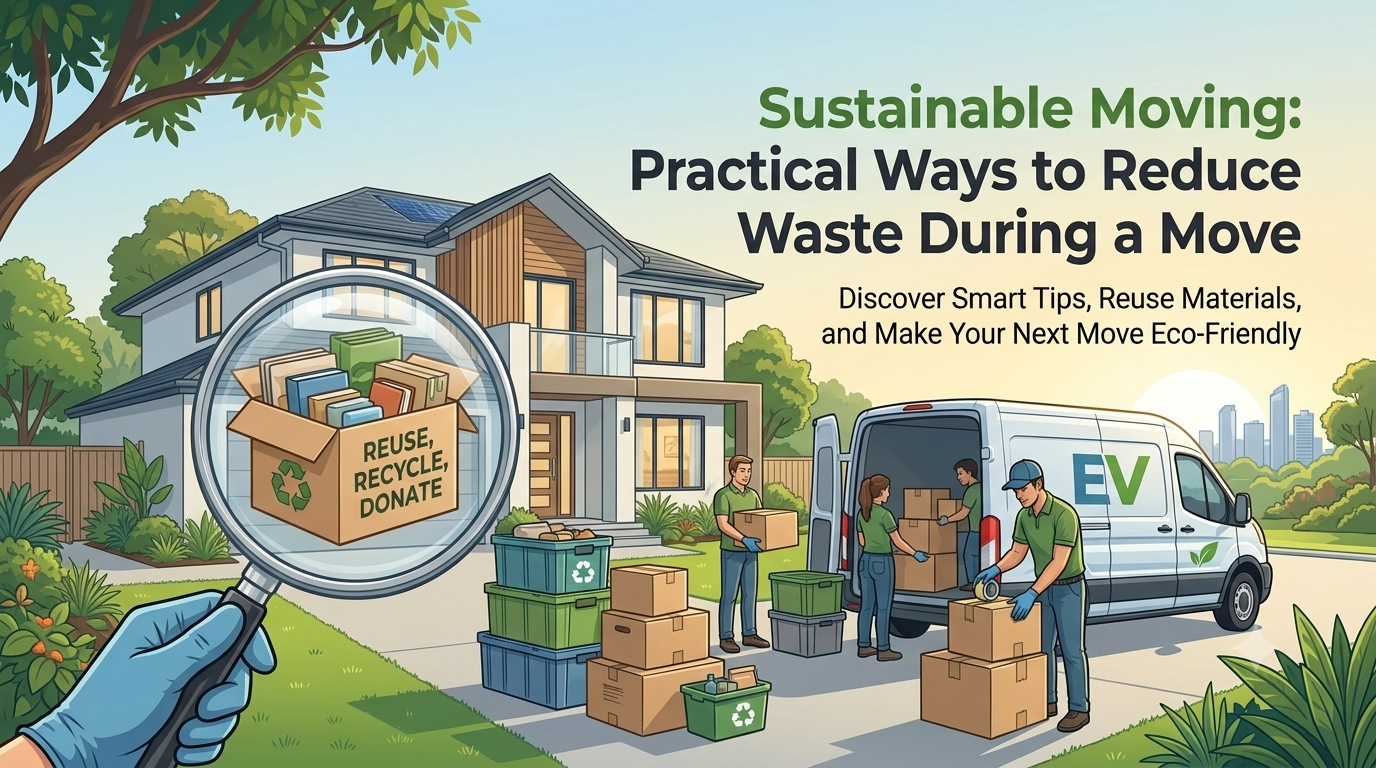
Moving house or even your business can generate surprising amounts of waste. Things get tossed out, single use boxes proliferate, food and cleaning products get thrown away, it’s easy to justify wasteful habits when you are in too much of a hurry to move. A more sustainable move is not about zero waste but rather a bunch of tweaks made in good time so that they don’t require as much effort right at the point when you’re ready to leave.
These tweaks could be as simple as reducing the amount you have to take with you, making sure you have enough boxes to reuse and thinking carefully about how to dispose or recycle unwelcome possessions.
Declutter before packing
The best way to make your footprint on the environment as small as it can possibly be while moving is to refrain from bringing along things you are done using. To do that, begin several weeks ahead of time, and go through every category one by one. Clothes, books, kitchenware, furniture, electronics, and garage items, among others, can all be divided into things to keep, sell, donate, recycle, or throw away.
Do not bother making a donation pile before calling around to check if any charity would be interested in receiving them. Mattresses, old furniture, and broken electronics may require special recycling procedures, so it is important to check beforehand. Lastly, scheduling pickups ahead of time will prevent unwanted items from going to the landfill just because they were not needed anymore.
Choose reusable packing containers
Cardboard boxes can be reused and recycled, but many are purchased for a single move and discarded immediately afterwards. Damaged or wet cardboard may be difficult to reuse, and large quantities can overwhelm household recycling bins.
Hiring reusable plastic crates creates a closed-loop packing system. The crates are delivered or collected, used for the move and returned for future customers. Services such as Green Crates also remove the need to store empty boxes after unpacking. Reusable containers are particularly practical for standard household goods, books, files, kitchenware and office equipment.
Reuse household materials for protection
Before purchasing large amounts of disposable wrapping, use clean household textiles where appropriate. Towels, blankets, and linen can cushion heavy objects and fill gaps in the packing. Original packaging from appliances/electronics can also be used if it is in good condition.
Things that are delicate or valuable still require protection. Packing paper or bubble wrap can be used, however, remember to save clean paper for packing in the future, when you will need to store things somewhere else or take them with you on a trip and recycle paper if it is allowed in your community.
Plan food and household consumables
Food waste often increases before a move because freezers, refrigerators and pantries must be emptied. Create a simple meal plan that uses existing food during the final weeks. Avoid buying bulk groceries that will need to be transported. Donate unopened, in-date pantry items where suitable services are available.
Use cleaning products and toiletries progressively instead of packing multiple half-empty containers. Check whether the removalist accepts liquids, aerosols, fuels and hazardous products. Never place chemicals in general recycling or pour them down drains; use local hazardous-waste services where required.
Move efficiently
Transport emissions are affected by distance, the size of your vehicle and the number of trips. A full load saves space by making best use of the room in your vehicle and reduces the number of return trips. Using stackable boxes and flat-packed furniture will help you get a neater load.
Make sure you consolidate loads where possible, and try not to make multiple small moves over several days if you can help it. Book a removalist with a vehicle that can fit your goods, not one that is too big or too small. Even within town, moving can produce a huge amount of emissions if you aren’t careful.
Dispose of special items responsibly
Electronics, batteries, paint, chemicals and some appliances should not be placed in ordinary household rubbish. Contact the relevant council or recycling program before moving week. Data should be securely removed from computers, phones and storage devices before they are sold or recycled.
Furniture that cannot be donated may be repairable, recyclable or suitable for council collection. Separate metal, cardboard, soft plastics and general waste according to local facilities. A labelled disposal area makes it easier for everyone helping with the move to use the correct stream.
Set up the new property thoughtfully
Sustainable moving continues after arrival. Unpack systematically, return hired equipment on time and keep reusable materials organised. Avoid buying duplicate furniture, storage containers or kitchen equipment before you have confirmed what fits in the new space.
Update addresses digitally where possible and choose electronic bills and statements. Recycle clean packaging promptly so it does not become mixed with general waste. If you discover additional unwanted items while unpacking, continue the donation and recycling process rather than placing everything into one rubbish pile.
A practical approach works best
The goal is not to make moving completely impact-free. It is to prevent avoidable waste and unnecessary transport. Early decluttering, reusable crates, responsible disposal and efficient loading can also save time, reduce clutter and make unpacking easier.
Create a short sustainability checklist alongside the normal moving checklist and assign tasks to household members or staff. When environmental choices are included in the main plan, they become part of the move rather than an extra job. Small decisions made weeks in advance can significantly reduce the pile of waste left behind on moving day.