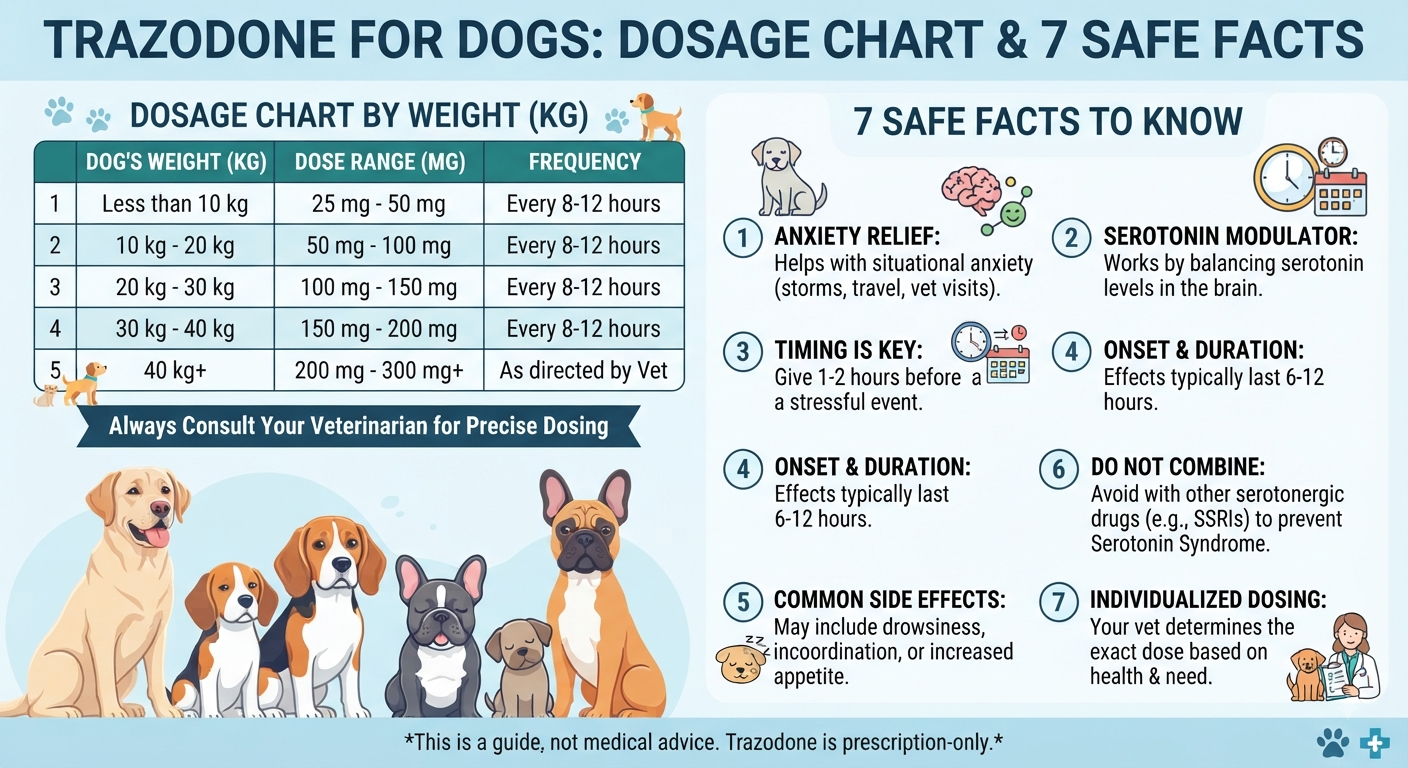
Searching for a trazodone for dogs dosage chart by weight kg usually means a dog owner wants a simple answer: weigh the dog, find the number on a chart, and give the corresponding amount.But veterinary medicine is seldom this easy. Trazodone is very frequently prescribed to dogs for anxiety, fear, stress for veterinary visits, travel, noise phobias and some behaviors but giving a dose is based on more than just what the dog weighs.
While some veterinary resources lists ranges for a dosage for trazodone this is not meant to be used instead of a veterinary visit and a prescription. The Merck Vet Manual has trazodone at 2-7.5 mg/kg orally every 8-24 hours as needed.1 The maximum allowed daily dose given in the Merck Veterinary Manual for the behaviors listed in their table is 19.5 mg/kg/day.1 This information is information for a range for veterinary medicine, and is not to be interpreted as home dosing chart.
This information is important because two dogs of the same size can have many different types of history, medications and sensitivities and indications for therapy.
Why a Weight-Only Trazodone Chart Can Be Misleading
Certainly weight is a factor, but it is just one aspect of determining dosage. The veterinarian will take into account age, general health, the liver and kidneys (or any organ system in general), heart condition, other medications that the dog is taking, the behavioral diagnosis, the response from previous medications that have been tried on the dog, and whether the trazodone use is short-term/ situational or long-term. A 20 kg dog getting trazodone prior to an impending stressful situation is not necessarily dosed the way another 20 kg dog is getting it as part of a long-term behavioral treatment program.
This is why veterinary reference ranges and published veterinary medication guidelines should be used as background information rather than treated as exact dosage calculators for an individual dog.
Trazodone is also used extra-label, or off-label, in dogs. VCA states that this medication is commonly prescribed in dogs for behavior problems despite the fact that there are no FDA-approved indications in the dog. This doesn’t mean that vets can’t use it, it is a common practice in veterinary medicine for drugs to be used off-label. It just means that owners should follow the exact orders of their veterinarian and not assume the instructions on the human bottle or an online dosage calculator apply directly to their dog.
What Trazodone Does in Dogs
Trazodone is a part of a category of drugs called serotonin antagonist and reuptake inhibitors, or SARIs. In veterinary behavior medicine, it is most often used to alleviate anxiety and excitement. VCA sites a variety of situations in which a veterinarian may prescribe trazodone.
Those include, but are not limited to: separation-related anxiety, noise phobias, vet visits, hospitalization, and travel.
Trazodone may be particularly effective when the situation is predictable. For example, if a dog consistently becomes severely anxious when thunderstorms hit, it may put on a medication regime that is dictated by a veterinarian before the actual stimulus occurs. It is not just an across the board sedative; generally, the goal is only to lessen fear and/or anxiety to a point where the patient can handle it, and not to make it “normal”. Merck veterinary manual similarly lists it as an option for anxiety disorders, fear-related aggression, compulsive disorders, sedation/anxiolysis for veterinary care, and postsurgical confinement.
What a Veterinary Dose Range Actually Means
When owners see a number expressed in mg/kg, it is easy to assume that the calculation is all they need.
The basic mathematical relationship is straightforward:
Medication amount = body weight in kilograms × prescribed mg/kg
But that calculation does not determine what a particular dog should receive.
For instance, if a vet specifically ordered X mg/kg dose, you’d use that to arrive at the total dose based on weight. The Rx is still number one though. Broad ranges may exist in published literature as clinicians tailor therapy based on the specific patient and the clinical context.
Merck’s latest reference guide on behavior medication suggests a trazodone range of 2-7.5 mg/kg po BID-TID prn, with a stated daily maximum of 19.5 mg/kg (i.e.
Give not more than approximately 2 times what’s ordered on a BID schedule with a per dose dose of equal to or greater than that). Again, take these numbers for what they’re worth, don’t go reaching for the maximum number in a range without vet approval/direction. Thus, the most we can safely get from a dosage chart: vet’s prescription is key and individual-you still can’t substitute that with a weight only chart.
Why the Same Weight Can Produce Different Prescriptions
Body weight is only one variable.
Sometimes, the best treatment plan when giving a dog medicine may differ if there is damage to the kidneys or liver as the drug is metabolized in a different way. VCA advises to be careful in administering trazodone in patients that suffer from kidney or liver conditions, or in any animal suffering from heart disease, or that has chronic heart disease. Other Factors In Determining Appropriateness Age, As they may be susceptible to other underlying causes, or on multiple medications that it is important to manage.
It is because you are taking trazodone.
This can also influence what else your dog has, how long they need this, and what has brought it on. According to the website Merck; Trazodone does usually have a fast onset when giving as a situational treatment drug. Merriam states the response of short-term trazodone may kick in an hour or two after it is Administered. In many cases, for a trazodone drug on an as needs be basis, to have a drug trial run beforehand when possible so as to evaluate its reaction and lasting qualities would be advantageous if you and the drug you have purchased can coordinate this, to test this on a non emergency situation.
Common Reasons Veterinarians Prescribe Trazodone
Trazodone may be considered when a dog experiences significant anxiety or fear associated with a specific situation.
Common examples include:
- Veterinary appointments
- Travel
- Fireworks
- Thunderstorms
- Hospitalization
- Separation-related distress
- Postsurgical confinement
- Certain anxiety-related behavioral problems
The medication is often part of a larger strategy rather than a standalone solution.
The approach from VCA for behavior medicine indicates the combination treatment (medication + modification/management) is most commonly effective. This is particularly relevant for managing chronic anxiety. A medication may lower the intensity of the dogs response, but it does not inherently train the dog to respond in a different way toward the stimuli that triggered the response.
Trazodone Side Effects in Dogs
Many dogs tolerate trazodone, but trazodone side effects in dogs can occur, which is why owners should monitor their pet and follow the veterinarian’s instructions carefully.
Side effects that VCA mentions are sedation,lethargy, vomiting or gagging, diarrhea or colitis, ataxia, polyphagia, increased anxiety, aggression, and some cardiovascular signs. Merck mentions that possible side effects include nausea, vomiting, diarrhea, sedation, ataxia, agitation, restlessness, increased anxiety, aggression and tachycardia; It also says that hepatotoxicity and priapism have been reported.
Therefore, owners not only need to watch whether the dog becomes more mellow, but also if his behavior and/or body condition abruptly changes. It is also important that trazodone may not yield the same behavioral response in all dogs; while some will be too drowsy, others may have increased anxiety, agitation or restlessness, This is one of the reasons why a veterinarian may want to administer a trial dose under observation prior to an upcoming event.
Drug Interactions Are a Major Consideration

A weight calculation cannot account for drug interactions.
Because trazodone works on serotonin, and influences the levels of serotonin, it can create problems if used concurrently with other medications also designed to act upon that same chemical message sending pathway. VCA cautions against the combination of trazodone and other serotonergic medications, as it increases the risk of serotonin syndrome. VCA lists as possible interacting substances SSRIs, MAOIs, tramadol, some anti nausea drugs, CNS depressants, certain fungal infections and more.
That’s just one reason it’s so important to tell your veterinarian everything your dog is on- not just drugs (prescription and OTC) but supplements, and herbs, too.
Just because your dog used that same medication before for some issue doesn’t mean you can give them that now concurrently with trazodone!
What Serotonin Syndrome Can Look Like
What if an overdose happens Serotonin Syndrome: Very rare side effect, caused by overproduction or overdose in serotonin. Signs. According to the VCAs possible symptoms include a vomiting, diarrhea, siezing (seizing in dogs called seizure), higher body temperature, dilated pupils, over-production of saliva, abnormal body motion, confusion, shortness of breath, or serious brain function changes.
If your dog becomes seriously ill or symptoms worsen rapidly, get your dog to the vet immediately if you know it may have eaten an excessive dose of tramadol [3].
If there is an OD and not to wait it out, you know a dog is ill and may soon die from it as it will progress to some point, contact their doctor.
[3]
Does Trazodone Make Dogs Sleepy?
It can.
We all know sedation and lethargy are well-documented potential side effects of trazodone. But the goal is not for the dog to be comatose or completely sedated. Good behavioral therapy is one that decreases anxiety and hyperarousal while maintaining adequate arousal and relatively normal function.
If the dog is totally unable to wake up, and/or unable to walk properly, is extremely weak and/or dramatically alters demeanor, call the vet.
If the dog becomes uncharacteristically restless, hypervigilant, agitated, aggressive, or more anxious, then the vet should again be informed, since idiosyncratic reactions and “unwanted” behavior may be possible.
Can Trazodone Be Used Every Day?
Sometimes, yes, but the schedule depends on why the medication is being used.
Trazodone may be used for specific predictable stressful events on an as needed basis and in some dogs will be included in long term behavior modification programs. According to VCA, Trazodone may also be used for short term to allow another long term medication to reach full effectiveness, or may be used as an adjunct medication long term. This means dosage based on body weight alone is impossible.
Never increase dosage by yourself just because the dog appears anxious again to you after 1 day.
Call to the prescribing veterinarian should be placed before changing the current dosage plan.
What If You Miss a Dose?
What to do is largely dependent on how you take the medication and when your next dose is due. As it states from VCA: If you miss a dose, try not to forget it. Giving you pet their lost medication may work as long as another dose is not very close in coming.
If a lost dose must be given, not it would be prudent not to give the 2 doses combined.
However, never giving 2 doses at once no matter what, the lost 1st doses not so important.
Why Human Trazodone Tablets Should Not Be Self-Prescribed for Dogs
If it’s for dogs only why do they still prescribe Trazodone as the human kind even if we already have some in home. It cannot be as dangerous for humans, right????. It might not be that complicated to do a conversion and save me some money too!
Well first and foremost, it is because while your veterinarian might see trazodone as appropriate for dogs it’s not your dog!
Your doctor as in your dog’s human doctor, (and not yours), prescribing that for him because their health depends on proper dosage, other health problems, the number of pills of each treatment goal as well as any other medications that your dog may take. VCA, for instance, mentions the information regarding veterinarian compounding; it clearly lists Trazodone and then stated: “administered only as directed by your veterinarian”. This comes up again for compound veterinary medicine. “FDA says compounding of animal drugs for-as labeled has never been approved as safe or effective although the drug may be compounded…””.
A Better Way to Use a Trazodone Dosage Chart
If you find a trazodone for dogs dosage chart by weight kg, use it as background information—not as a substitute for a prescription.
A responsible approach is to confirm five things with the veterinarian:
First, confirm the purpose. Is the medication for travel, storms, veterinary visits, separation distress, postsurgical confinement, or another behavioral problem?
Second, confirm the exact dose. Ask for the prescribed milligram amount rather than relying on an online calculator.
Third, confirm timing. The interval can matter just as much as the amount.
Another option is Fourth, look for other medicines. Specifically check out medications the dog may be taking for a mental health disorder, a pain medication, sedative, or a variety of drugs the canine is on that have impact over the central nervous system. Lastly; ask when you should call us. By knowing the typical effects of these drugs versus potentially serious signs or symptoms of an reaction, you will have an understanding for when you simply need to be concerned.
The Bigger Picture: Medication Is Only One Part of Anxiety Treatment

Medication can be useful, but canine anxiety often requires a broader plan, and understanding dog health and wellness can help owners recognize why veterinary care, behavior management, and appropriate treatment may need to work together.
This is when behavioral medications might be indicated if behavioral techniques alone can not address the problem, and treatment becomes an integrated combination of medication and behavior modification. A dog that suffers from fears of thunderstorms could benefit from such integration, combined with the correct behavior modification plan and veterinarian approved medications if warranted along with environmental management and a den or secure place for her to go when anxious, according to VCA. A dog with separation issues needs behavior modification not to reach immediately for more medication just because they are unhappy. We want to make their minds at ease, we not try to make behaviors disappear at the cost of them.
What Pet Owners Should Remember About Weight-Based Dosing
Useful since so many veterinary drugs are calculated on how much they weigh, mg per kg, but weight alone should not stand alone.Obviously, a 5-kg dog and a 35-kg dog may require different medication doses, but even two dogs that weigh the same—20 kg each—may need completely different treatment plans. Dosage and treatment decisions depend on factors such as age, health history, diagnosis, current medical conditions, existing medications, and the location and duration of treatment.That’s why a range that can be printed on the drug company, label etc and a personal prescription don’t go anywhere near the same page of required therapeutic doses.
Conclusion
A trazodone for dogs dosage chart by weight kg can help explain how veterinary dosing is expressed, but it cannot safely determine an individual dog’s prescription by itself. Dosing guidelines are readily available in veterinary literature, and veterinaries adjust according to the dog’s needs, cause for treatment, concurrent medications, and response.
In addition to being another tool in the behavior modification plan, trazodone can be an appropriate adjunct when dealing with canine anxiety and other stressors. Because of the potential for side effects and drug interactions, including serotonin syndrome, owner’s should always consult their veterinarian.
The most helpful question the owner could ask is not how many milligrams my dog weighs and I will call and get a dose from you, but “What dose and how should my veterinarian decided that this specific dog is treated?”
FAQs: Trazodone for Dogs Dosage Chart by Weight kg
1. Is trazodone dosage for dogs based only on weight?
No. A veterinarian considers more than body weight when determining trazodone use. The dog’s age, health conditions, reason for treatment, other medications, and individual response can all affect the appropriate dose.
2. Can I use a trazodone dosage chart by weight kg without a veterinarian?
It is not advisable. A weight-based chart can be useful for understanding why doses differ between dogs, but it should not be used to calculate or change a dog’s dose independently. Trazodone is a prescription medication and should be used according to veterinary instructions.
3. What is trazodone commonly prescribed for in dogs?
In some cases, your vet might prescribe trazodone for anxiety, stress, fear and situations involving one of these behaviors. It may also be used on an as-needed basis prior to potentially scary activities such as vet appointments or trips.
4. How long does trazodone take to work in dogs?
When dogs might start feeling better vary depending on the type of prescribed dose, the reason that the pain meds are being given and the patient. There is no set number of time all dogs will have for pain to decrease that works, your veterinarian can best explain expectations of your pet.
5. What side effects can trazodone cause in dogs?
Some effects could include lethargy, lack of coordination, upset stomach or behavior changes. More severe reactions, especially if combined with other drugs, can result and these effects need prompt veterinary advice to be discussed.
6. Can trazodone be given with other medications?
This sometimes, but not all combinations, are safe. Trazodone can interact with a number of different drugs and materials. It especially is known to interact with drugs that target serotonin. ALWAYS tell your vet every medication, supplement, or other product your dog is receiving before you start the trazodone.
7. What should I do if my dog receives too much trazodone?
Don’t delay–Call your veterinarian immediately or an animal ER-and let you have your dog’s medication, the dose of tablet, the size of tablet, and how much he was given and his current weight handy to show them over the phone.