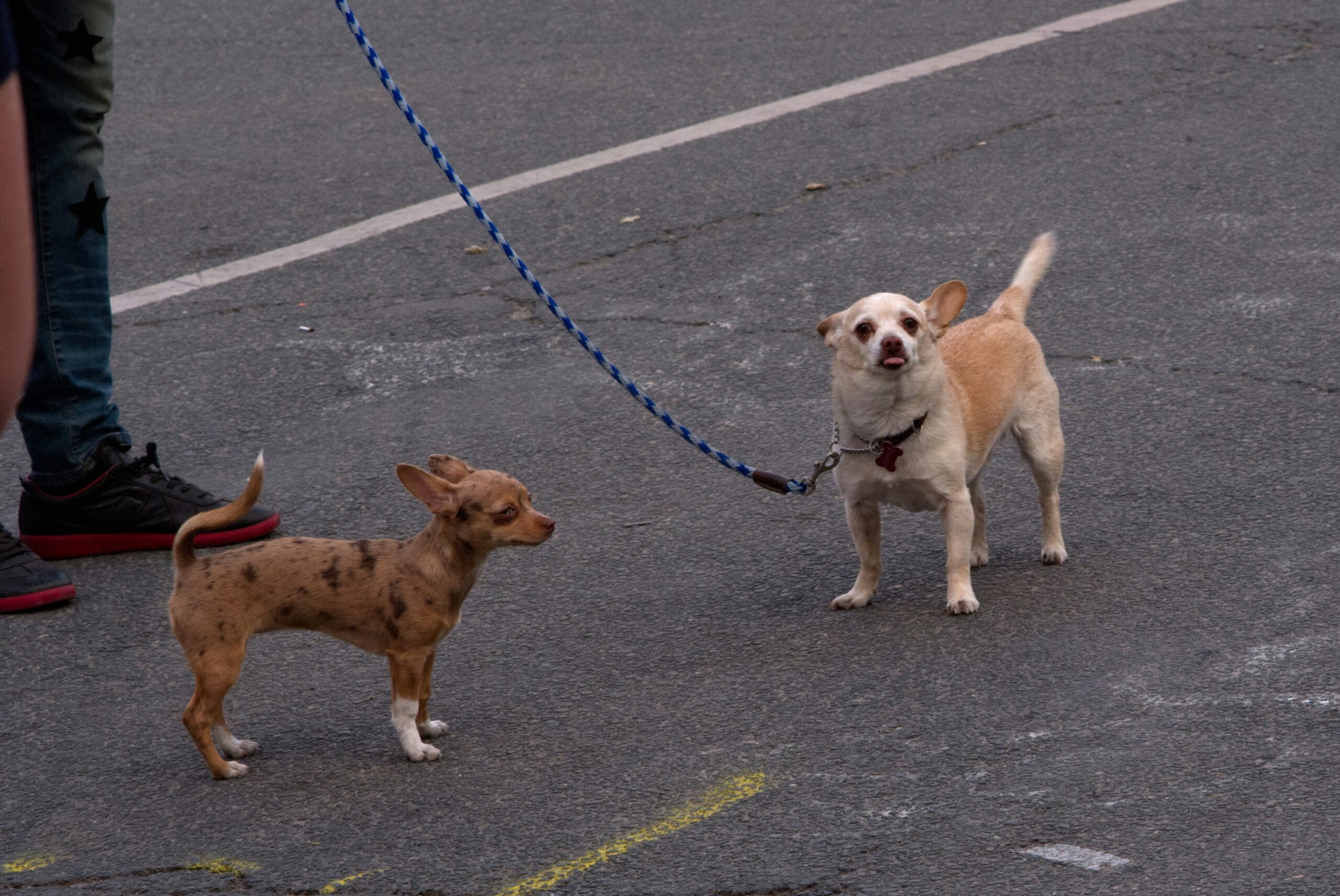
A Chihuahua can be sitting quietly one moment and barking furiously at a stranger, another dog, or an unfamiliar noise the next. That dramatic reaction is one reason people ask, why are Chihuahuas so angry?
In simplest terms, though, it doesn’t always necessarily translate to true “anger”. Growling, barking, lunging, snapping, even nipping or biting the leg can be caused by things like fear, worry, anxiety, territorial instincts, frustration, or even pain or simply bad habits. Chihuahuas are also, by nature, watchful little beings who can tend to be withdrawn from strangers and whose physical stature alone can make the rest of the world seem intimidatingly large.
In fact, according to the American Kennel Club, Chihuahua characteristics include: alert, intelligent, loyal, and responsive.
They can also be somewhat reserved around those outside their family.
Of course, none of this implies every Chihuahua inherently possesses the capacity for aggression or that such traits are necessarily breed standard. It varies with each animal based on the combination of their genes, up-bringing, training, social skills with other beings and with the world at large, health condition, and the specific situations and people they are exposed to. However, if one can identify the reason for this behavior, in much the same way one addresses the source of human aggression (it’s usually never as straightforward as just “being angry”), one can more effectively assist such Chihuahuas toward becoming happy, well-adjusted members of their households.
Why Are Chihuahuas So Angry? Start With What “Angry” Really Means
Dogs’ experience and expression of emotions are not identical to our own. If a person states a Chihuahua is angry, they could be referring to a variety of behaviors. A Chihuahua who is barking aggressively at a person who is nearing the property, the dog may be experiencing territorial aggression.
If the Chihuahua who growls as a person reaches for it, it may be in fear or an uncomfortable position.
A Chihuahua who nips an approaching animal who is near the dog’s food, it may be experiencing food guarding. These things make a difference, because the answer is dependent on the intent. Canine aggression has several classifications in which an veterinary behaviorist categorizes these as:Fear related aggression,Territorial aggression,Possessive aggression,Protective aggression,Pain related aggression,Redirected aggression, andLearned aggression. One or more factors can affect an individual dog’s behavioral expression.
Therefore, instead of asking if a Chihuahua is naturally angry, a more pertinent question might be: What is this dog trying to achieve with this behavior?
In a lot of the cases, distance from something it considers to be a threat.
1. Their Small Size Can Change How They Experience the World
There are few items most dogs, people, or common household objects you encounter weigh less than a chihuahua. Depending on the person’s posture, standing directly over top of the dog can make her feel huge. It’s enough to make her feel terrified when a much bigger dog gallops toward you.
Of course, that doesn’t mean chihuahuas feel automatically insecure and wobbly just because they are so small.
They just learn to maneuver the world in differently how and the way people interact with them differently depending on size. Larger dogs who feel their space violated may bark or growl and most humans will back away. Smaller dogs who don’t feel comfortable may “bark” or growl yet be picked up, giggled at, or even largely ignored. Some owners may accept certain dog behavior if they feel they wouldn’t otherwise allow in their larger breed dog – these actions help to normalize bad manners that eventually can become behavior habits.
Studies reviewed by the AKC also linked a greater history of punishment towards smaller dogs to higher levels of anxiety and aggressive tendencies between individuals, more significantly in smaller dogs.
The takeaway point is not that these dogs are weak – only that they should also be paid attention to more fully without any assumption made solely based on size.
2. Fear Is Often Hiding Behind the Barking
One of the common misconceptions about animal behavior is to interpret an aggressive display as confidence. For example, aihuahua may growl, bark, or lunge at another dog or human because it wants them to retreat. When this strategy is successful (e.g.
The other animal leaves), the behavior is reinforced.
Suppose your Chihuahua barks,growls, and lurches forward while facing the owner during a walk to a place this dog associate with something scary. If your owner immediately turns around and walks you in the opposite direction, from your dog’s perspective, you turned into the threat! This can encourage continued fear response. Such aggression due to fear-induced threat is very common for veterinary behavioral practices when a dog is subjected to unknown situations, peoples, animals or settings for a variety of reasons – in some cases associated with traumatic past incidents, .
A dog that feel “trapped” maybe become a defensive dog instead of escaping.
This the rationale behind the detrimental effect of punishment for dog exhibiting their stress.
3. Chihuahuas Are Naturally Alert and Vocal
Part of the answer to why are Chihuahuas so angry is simply that they can be very watchful dogs.
The AKC describes Chihuahuas as alert and notes that they may bark at strangers or unexpected noises. Early socialization and training can help them become more comfortable with people and other animals.
A Chihuahua sitting near a window may react to:
- people walking past
- another dog outside
- delivery workers
- unfamiliar sounds
- vehicles
- animals in the yard
A human being can brush off a number of those occurrences without thinking much of them, but a well-groomed dog considers each one the cue for an observation. A dog’s barking doesn’t usually mean she’s angry about something – it means she’s behaving like a guard dog. The concern really comes when the response is hard to stop and starts escalating to aggression.
4. Poor Socialization Can Make Ordinary Things Feel Threatening
Socialization isn’t about just making sure the puppy likes people; it’s about positive and safe exposure to new people, dogs, places, sights, sounds, surfaces, people touching them, etc. A Chihuahua that doesn’t get to have any novel experiences may not know what to think when a situation occurs. A dog that only meets one or two people is liable to get nervous when a gaggle of people approach it.
Same if your Chihuahua’s only encounters with dogs have been negative encounters with dogs unknown; when he meets one in a neutral setting that is likely to send him into high-alert.
According to AKC, insufficient socialization can contribute to dogs becoming fearful of novel things, while consistent and appropriate socialization can help a dog become comfortable in their environment and with various factors. It’s not that you can’t teach an improperly socialized dog how to make good decisions, it just may take time and help.
5. Some “Angry” Chihuahuas Are Actually Guarding Something
Resource Guarding Some Chihuahua owners refer to a growing, aggressive dog as “jealous” or “angry” when the doggrowlsa about its toy, food, food, bed, crate or anyone in particular. In truth, resource guarding could be triggered if the chihuahua perceives it needs to deter someone from getting it a possession it cares about. The same thought occurs whenit’s behaving territorial; A chihuahuatebehaves likea different house when itsin a new location compared to whenin a home.
It because thehouse is famililand and the dog feel territorialin that area.
However punishmentoften amplifies this behaviour,owners may find it useful to findthe resource trigger, restrict access as necessary, and employ controlled behaviourmodification plans for best success.
6. Pain Can Turn a Friendly Dog Into a Defensive One
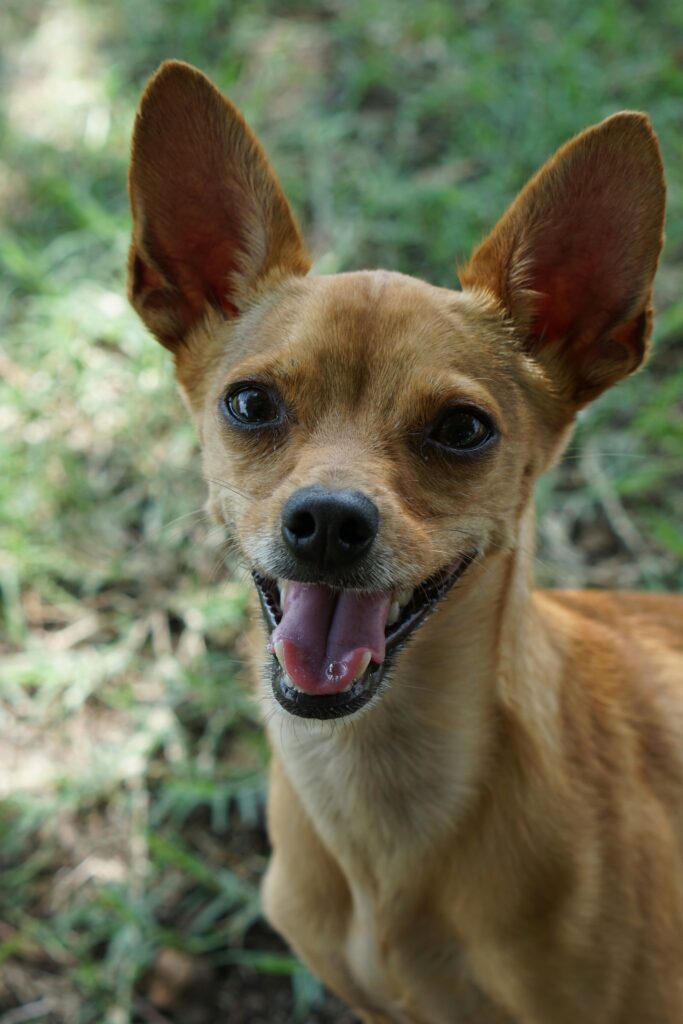
Noticeable Temperamental Shifts Also warrant attention. Suddenly Snappy Chihuahua If a normally cuddly Chihuahua startling growling when cuddled, biting when being handled or picked up, cowering away in fear and pain, or becomes unusually aggressive when handled, then it’s time to look into pain or disease in a few key areas, such as dental disease, painful muscles, bone, tendons, ligaments or injuries, pain skin, nervous conditions and other painful diseases. Dogs that are injured when moved may begin growling or snapping to communicate pain.
This goes without saying especially when dealing with small pets.
Dog owners often take hold of their dogs’ movements or pick up their small dogs without awareness the dog is hurting in some ways, due to the common practice that is followed. Thus, a newly started or swiftly turning aggressive behavior of your dog should not necessarily be treated as problem-training. Seeing your dog veterinarian might explain it if the disease you can do so that the problem you may see.
7. Human Reactions Can Accidentally Reinforce the Behavior
Dogs learn from consequences.
For example, if a Chihuahua barks whenever a stranger enters, and then backs away, the stranger will back away and the dog may learn that its barking is what makes new people move away. In similar fashion, if the owner picks up the dog immediately when another dog appears, the Chihuahua might associate other dogs with an emotional experience with restraint, over attention, or to escape. It is not that owners set out to raise aggressive dogs, these patterns of training often emerge very gradually.
It may be that what occurs following an aggressive incident, can effect how aggressive behavior develops since if the aggression is successful in altering the situation, the dog may learn to repeat its aggressive response.
This is how understanding the sequence-trigger reaction consequence, can be quite beneficial.
8. Genetics and Individual Temperament Matter Too
Not every Chihuahua has the same personality.
Some are outgoing and sociable. Others are cautious. Some are highly confident, while others become nervous in unfamiliar environments.
Temperament has a biological component, but behavior is also influenced by learning and experience. The AKC notes that temperament describes an individual’s natural tendency to respond to stimuli, while behaviors associated with temperament can be modified through exposure and learning.
This distinction is important.
Breed tendencies can influence the starting point, but they do not determine an individual dog’s entire personality.
A Chihuahua should therefore not be judged solely by its breed label.
9. Stress Can Build Until the Dog Finally Reacts
There is not always one overwhelming trigger in fact, very often there isn’t! Your dog may have a number of mild stressors going on throughout the day such as unknown visitors at home, loud noises, being touched, other dogs, a change in normal daily routine or maybe it’s just not had enough sleep. At that moment, the relatively insignificant incident may cause the much bigger response to occur.
This concept has sometimes been referred to trigger stacking where a variety of stressful circumstances can mount up, and individually they might not amount to much but combined, they’re more than the dog can handle.
Monitoring your dog’s body language prior to any vocalization or aggression can offer you important clues. Signs that can indicate discomfort include turning its head, ‘freezing’, avoiding your gaze, lip licking, stiffness, attempting to leave, hiding or becoming abnormally still and quiet. If you learn to read the early warning signs, then you may be better able to help before unwanted behavior begins.
What Should You Do If Your Chihuahua Is Aggressive?
The first priority is safety.
It does not take provocation, is your intention to tease the dog to see exactly how bad will it is not a good. Do not turn him in the corner, catch it out burst or to push to the interaction of what a stranger that fears. The most practical option should be to recognize the signs predictable from the triggers and establish sufficient distance so that they do not trigger extreme behavioral changes.
Instead Training should be for all a program where both positive reinforcement must reward desirable behaviors and modification of attitudes should not happen, to enable the dog not necessarily to respond very fear triggers.
If there is proper management desensitization and counter-conditioning can have some benefit. For example if the chihuahua are very frightened by an Unknown presence visitors, perhaps you should establish sufficient distance when they start arriving,Reward each event where the reaction is calm in a desirable and thus that it may be safe to eventually prove that anUnknown presence implies a. Not, The work process must then reach the maximum possible of the comfort level of the pet. The American Canine Association Inc..
He advised that you hire the help of a professional on aggression. It is understood that this type of issue may only be solved with careful adjustment based on the root of aggression.
What Not to Do With an Aggressive Chihuahua
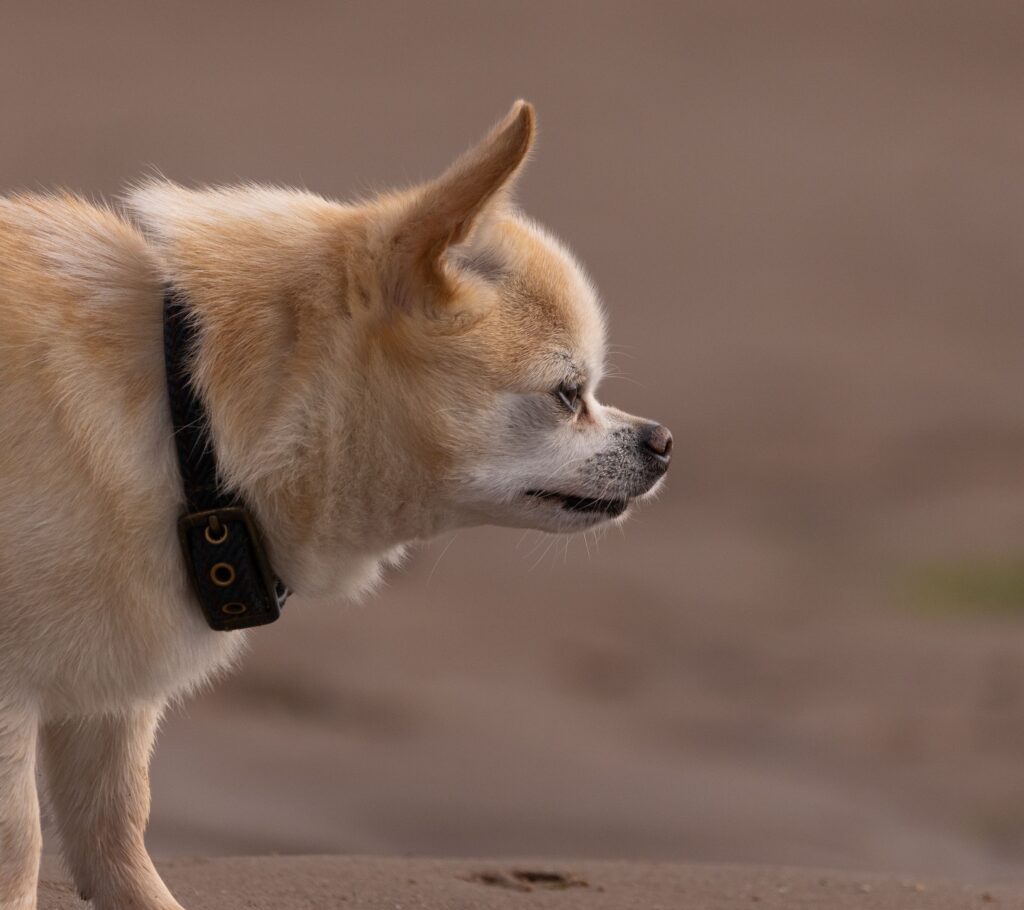
There are numerous typical responses that only make the problem worse.
Don’t punish growling. Growling is an important communicative signal that the dog is uneasy.
Don’t use physical punishment. Beating, jerking on the leash, intimidation or force can increase a dog’s fear and anxiety level and actually escalate aggressive response.
Don’t assume the dog is trying to “dominate” everyone. There are many reasons dogs may be aggressive such as, fear, protection of resources, pain, territoriality and prior learning.
Don’t force socialization. Yanking a dog towards another dog or person to force interaction does not build confidence. It may reinforce negative association with that person/animal.
Don’t ignore consistent warnings. A Chihuahua that consistently shows aggressive behaviors should be evaluated before a person is bitten.
When Professional Help Is Appropriate
Professional assistance is all the more vital if a Chihuahua has already bitten; routinely tries to nip; displays strong possessiveness for a resource; attacks other animals; has sudden onset aggression for reasons not immediately obvious.
Initially the cause will be checked by a vet to rule out underlying health concerns. After medical causes are ruled out a vet behaviorist, a certified animal behaviorist or the dog trainer will most likely create the treatment plan together with you.
The main goal of this training is to change the behavior pattern the Chihuahua is exhibiting. This doesn’t just stop the dog from barking, it shows dog appropriate behaviors, what to do instead.
With serious aggression behavior the rehabilitation can take months of hard work. There might still be a certain management of the dog when the behavior is getting better.
The Chihuahua’s “Anger” Often Makes More Sense Once You Read the Situation
A Chihuahua barking furiously at a stranger can look like a tiny dog picking a fight with the world. Look more closely, though, and the picture may be different.
The dog may be frightened. It may be guarding its home. It may have learned that barking makes strangers leave. It may be overwhelmed by an unfamiliar environment. Or it may be experiencing pain.
That is why the question why are Chihuahuas so angry has no single breed-wide answer.
Chihuahuas can be alert, vocal, protective, reserved, and intensely expressive, but individual behavior is shaped by far more than breed. Early socialization, training, environment, previous experiences, genetics, health, and the consequences of the dog’s behavior all contribute.
The most productive response is to stop thinking of the dog as “bad” and start looking for the trigger.
Once you know what the Chihuahua is reacting to, the barking, growling, or snapping becomes information rather than a mystery. And that shift—from punishment to understanding—is often the starting point for safer, calmer behavior.
8. Frequently Asked Questions
1.Are Chihuahuas naturally aggressive?
No. Chihuahuas can be alert, vocal, reserved, and protective, but aggression is not inevitable. Individual temperament, socialization, training, environment, health, and past experiences all influence behavior.
2.Why does my Chihuahua bark at everyone?
Your Chihuahua may be reacting to unfamiliar people because of fear, excitement, territorial behavior, or a strong watchdog response. Identifying what happens immediately before the barking can help reveal the trigger.
3.Why does my Chihuahua growl when I pick it up?
A Chihuahua may growl when picked up because it is frightened, uncomfortable with handling, guarding something, or experiencing pain. If this behavior is new, a veterinary examination is appropriate.
4.Why is my Chihuahua aggressive toward other dogs?
Possible reasons include fear, inadequate socialization, frustration, territorial behavior, previous negative experiences, or individual temperament. Avoid forcing interactions and consider professional behavior guidance if the reactions are severe.
5.Can an aggressive Chihuahua be trained?
Yes. Many behavior problems can be improved with appropriate management and behavior modification. The approach depends on the underlying cause, and serious aggression is best addressed with help from qualified veterinary or behavior professionals.
6.Should I punish my Chihuahua for growling?
Punishment is generally not a good way to address growling. Growling provides an early warning that the dog is uncomfortable. Punishing the warning without addressing the underlying emotion can make the situation less predictable.
7.When should I worry about my Chihuahua’s aggression?
Take aggression seriously if your Chihuahua repeatedly lunges, snaps, attempts to bite, guards resources intensely, or suddenly becomes aggressive after previously being friendly. Sudden behavioral changes also warrant veterinary evaluation.
Conclusion
So, why are Chihuahuas so angry? In most cases, what looks like anger is better understood as a combination of fear, insecurity, territorial behavior, genetics, limited socialization, or simply a strong reaction to situations they find threatening. Their small size can also make certain sounds, people, dogs, or unfamiliar environments feel more intimidating, which may lead to barking, growling, snapping, or other defensive behaviors.
Of course, all of this does not mean that a Chi will automatically develop behavioral problems. Personality, education, life experience, environment and even health status play an important role here. Nevertheless, the first way to rule out pain-related behavioral changes (or other diseases) for suddenly irritable or aggressive behavior in the Chihuahua the vet is also the only way.
It goes beyond labeling an \”angry CHIHUAHUA\”. Only if one understand why a behavior goes to her or, in this case, the other dog not even aware, that helps with behavioral changes in the Chihuahua to reduce behavioral responses to the outside and create trust.