Jerusalem holds a profound, timeless, and indispensable place in Islamic history, theology, and spiritual life. Known in Arabic as Al-Quds (The Holy City) or Bayt al-Maqdis (The Holy House), Jerusalem represents one of the most sacred geographic anchors for over 1.8 billion Muslims worldwide. When inquiring why is Jerusalem important to Islam, one enters a rich tapestry of prophetic history, Quranic revelation, architectural devotion, and eschatological belief that spans over fourteen centuries.
In Islamic tradition, Jerusalem is not merely a historical city or an ancient landmark; it is a living symbol of monotheistic continuity. It serves as the physical bridge connecting the prophetic lineage of Abraham, David, Solomon, and Jesus (peace be upon them) directly to the final prophet of Islam, Muhammad (peace be upon him). Understanding why is Jerusalem important to Islam requires exploring its role as the first direction of Muslim prayer (Qibla), its central position in the miraculous Night Journey (Isra and Mi’raj), its sacred sanctuary (Al-Aqsa Mosque), and its enduring status across Islamic law, civilization, and future eschatological events.
This comprehensive guide offers an in-depth examination of why is Jerusalem important to Islam. We will explore Quranic passages, Hadith literature, historical developments under early Islamic governance, architectural achievements, and the deep emotional connection Muslims maintain with the Holy City today.
1. The Prophetic Lineage: Jerusalem as the Cradle of Monotheism
To understand why is Jerusalem important to Islam, one must first understand the Islamic concept of prophecy (Nubuwwah). Islam does not view itself as a new religion created in the 7th century, but rather as the final culmination and restoration of the original monotheistic message taught by all earlier prophets sent by God.
┌──────────────────────────────────────────────────────────────────────────┐
│ THE PROPHETIC LINEAGE IN JERUSALEM │
├──────────────────────────────────────────────────────────────────────────┤
│ │
│ [Prophet Ibrahim / Abraham] ──► Establishes Monotheistic Foundation │
│ │ │
│ ▼ │
│ [Prophet Dawud / David] ──► Establishes Sacred Seat of Governance │
│ │ │
│ ▼ │
│ [Prophet Sulayman / Solomon] ──► Constructs the Great Place of Worship │
│ │ │
│ ▼ │
│ [Prophet ‘Isa / Jesus] ──► Preaches Monotheism in Bayt al-Maqdis │
│ │ │
│ ▼ │
│ [Prophet Muhammad] ──► Leads All Prophets in Prayer at Al-Aqsa│
│ │
└──────────────────────────────────────────────────────────────────────────┘
Muslims revere the noble prophets of the Abrahamic tradition as true servants and prophets of God (Allah). Jerusalem served as the primary sanctuary and home for many of these revered figures:
- Prophet Ibrahim (Abraham): Migrated to the blessed lands of Palestine, establishing the foundation of pure monotheism (Tawhid).
- Prophet Dawud (David): Established Jerusalem as a major center of spiritual governance and divine praise.
- Prophet Sulayman (Solomon): Rebuilt and expanded the sacred sanctuary (Bayt al-Maqdis) with divine guidance, making it a global center for God’s worship.
- Prophet ‘Isa (Jesus): Taught the message of God in and around Jerusalem, performed miracles by divine permission, and was raised to the heavens from this blessed region.
When Muslims reflect on why is Jerusalem important to Islam, they recognize the city as the shared spiritual home of all true monotheistic prophets. In Islamic theology, Prophet Muhammad did not replace these earlier figures; he validated, honored, and completed their spiritual legacy.
2. The First Qibla: The Original Direction of Muslim Prayer
Among the primary historical reasons explaining why is Jerusalem important to Islam is its status as the first Qibla—the directional focus toward which all Muslims faced during their daily prayers (Salah).
┌──────────────────────────────────────────────────────────────────────────┐
│ THE EVOLUTION OF THE QIBLA │
├───────────────────┬──────────────────────────────────────────────────────┤
│ PERIOD │ DIRECTION OF PRAYER (QIBLA) │
├───────────────────┼──────────────────────────────────────────────────────┤
│ Makkan Period │ Jerusalem (Facing Al-Aqsa, with Kaaba aligned) │
│ Early Madinan │ Jerusalem (Exclusively for ~16 to 17 months) │
│ Post-Revelation │ Makkah (The Sacred Mosque / Kaaba) │
└───────────────────┴──────────────────────────────────────────────────────┘
During the early years of Islam in Makkah, and for approximately sixteen to seventeen months after the migration (Hijrah) to Madinah, the Prophet Muhammad and his companions faced Jerusalem during every single daily prayer.
The Quran highlights this pivot in human history in Surah Al-Baqarah (2:142–144). While God eventually directed Muslims to turn their faces toward the Kaaba in Makkah, Jerusalem retains its unique distinction as Ula al-Qiblatayn—the First of the Two Qiblas.
This historical reality serves as a powerful answer when scholars discuss why is Jerusalem important to Islam. For the foundational formative years of the Muslim community, the daily spiritual orientation of every believer on Earth was locked directly onto the holy sanctuary in Jerusalem.
3. The Miraculous Night Journey: Al-Isra’ wa al-Mi’raj
Perhaps no single event answers why is Jerusalem important to Islam more dynamically than the miraculous event known as Al-Isra’ wa al-Mi’raj (The Night Journey and Ascension).
Occurring around the year 621 CE, during a period of intense personal grief and persecution for the Prophet Muhammad, God granted him the miraculous journey of Isra and Mi’raj in Islamic tradition, transporting him in a single night from the Sacred Mosque (Al-Masjid al-Haram) in Makkah to the Distant Mosque (Al-Masjid al-Aqsa) in Jerusalem.
┌──────────────────────────────────────────────────────────────────────────┐
│ THE ARCH OF THE NIGHT JOURNEY │
├──────────────────────────────────────────────────────────────────────────┤
│ │
│ [Al-Masjid al-Haram] ──► Makkah Departure on Al-Buraq │
│ │ │
│ ▼ │
│ [Al-Masjid al-Aqsa] ──► Jerusalem: Prophet leads all Prophets in Salah │
│ │ │
│ ▼ │
│ [Al-Mi’raj] ──► Ascension from Noble Rock to the Heavens │
│ │ │
│ ▼ │
│ [Divine Presence] ──► Obligation of the 5 Daily Prayers Established │
│ │
└──────────────────────────────────────────────────────────────────────────┘
The Quranic Confirmation
The event is explicitly commemorated in the very first verse of Surah Al-Isra (17:1):
“Exalted is He who took His Servant by night from Al-Masjid al-Haram to Al-Masjid al-Aqsa, whose surroundings We have blessed, to show him of Our signs. Indeed, He is the Hearing, the Seeing.”
Leading All Prophets in Prayer
Upon arriving at Al-Aqsa in Jerusalem, the Prophet Muhammad was met by all the previous prophets—including Abraham, Moses, David, Solomon, and Jesus. In a moment of immense spiritual symbolism, Prophet Muhammad stepped forward and led all the prophets together in congregation prayer.
This singular gathering solidified Jerusalem as the universal meeting ground of monotheism. When asking why is Jerusalem important to Islam, scholars emphasize that Jerusalem was chosen by God to be the precise location where all divine messages converged and unified under the final covenant.
The Ascension (Mi’raj)
From the sacred rock (Al-Sakhrah) located within the sanctuary of Jerusalem, the Prophet Muhammad ascended through the seven heavens into the Divine Presence, where the central pillar of Islam—the five daily prayers—was ordained for humanity. Thus, Jerusalem stands as the earthly gateway to the heavens in Islamic tradition.
4. The Sacred Sanctuary: Understanding Al-Masjid al-Aqsa
A frequent point of confusion when discussing why is Jerusalem important to Islam involves the physical boundaries and meaning of Al-Masjid al-Aqsa.
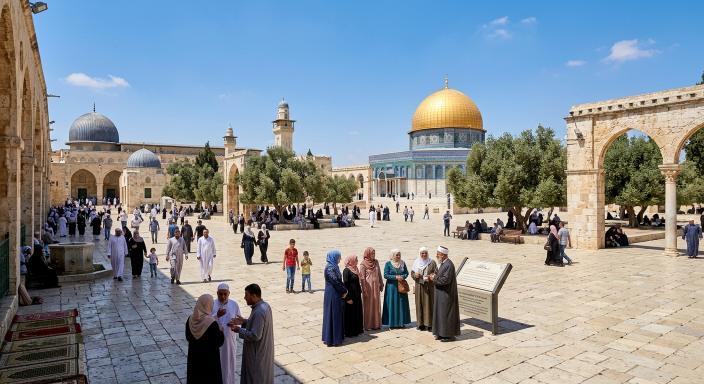
In Islamic law (Fiqh) and history, Al-Masjid al-Aqsa does not refer merely to a single building with a silver dome or golden dome. Rather, it refers to the entire elevated sanctuary platform (Al-Haram al-Sharif or The Noble Sanctuary), spanning approximately 144,000 square meters (about 36 acres).
┌──────────────────────────────────────────────────────────────────────────┐
│ COMPONENTS OF AL-MASJID AL-AQSA SANCTUARY │
├──────────────────────────────────────────────────────────────────────────┤
│ │
│ ┌────────────────────────────────────────────────────────────────────┐ │
│ │ AL-HARAM AL-SHARIF (ENTIRE 36-ACRE SACRED ENCLOSURE) │ │
│ │ │ │
│ │ ┌──────────────────────────┐ ┌──────────────────────────────┐ │ │
│ │ │ Jami’ al-Qibli │ │ Dome of the Rock │ │ │
│ │ │ (Lead-domed South Building)│ │ (Qubbat al-Sakhrah / Gold) │ │ │
│ │ └──────────────────────────┘ └──────────────────────────────┘ │ │
│ │ │ │
│ │ ┌──────────────────────────┐ ┌──────────────────────────────┐ │ │
│ │ │ Buraq Wall / Western Wall│ │ Musalla Marwani, Courtyards, │ │ │
│ │ │ (Tethering site of Buraq)│ │ Fountains & Arcades │ │ │
│ │ └──────────────────────────┘ └──────────────────────────────┘ │ │
│ └────────────────────────────────────────────────────────────────────┘ │
│ │
└──────────────────────────────────────────────────────────────────────────┘
Every foot of ground within this enclosure—including the open courtyards, trees, arcades, and prayer halls—is considered part of Al-Masjid al-Aqsa. Key structures within this sanctuary include:
- Jami’ al-Qibli (The Qibli Mosque): The building located at the southern end of the complex with a dark lead-covered dome, where the congregational prayer leader (Imam) stands.
- Qubbat al-Sakhrah (The Dome of the Rock): The iconic octagonal structure with a golden dome built over the sacred rock from which the Prophet Muhammad ascended during the Mi’raj.
- Musalla Marwani: A spacious subterranean prayer hall located beneath the southeastern corner of the compound.
- The Buraq Wall: The western boundary wall of the compound, where the Prophet Muhammad tethered his heavenly mount (Al-Buraq) during the Night Journey.
Understanding the sanctuary’s true size clarifies why is Jerusalem important to Islam: the entire 36-acre compound is consecrated space, where prayer carries elevated rewards in Islamic tradition.
5. Scriptural Status: Jerusalem in Quran and Hadith
The theological framework detailing why is Jerusalem important to Islam is supported by extensive scriptural evidence found across both the Quran and authentic Prophetic traditions (Hadith).
1.Step 1: The Land of Barakah (Divine Blessing):Quranic Blessings.
The Quran repeatedly refers to Jerusalem and the surrounding region of Palestine as Al-Ard al-Mubarakah (The Blessed Land). In Surah Al-Anbiya (21:71), God describes saving Abraham and Lot by delivering them to “the land which We have blessed for the worlds.”
2.Step 2: The Three Holy Sanctuaries:Prophetic Ranking.
In an authentic narration recorded by both Sahih Bukhari and Sahih Muslim, the Prophet Muhammad explicitly ranked the sacredness of holy sites:
According to this hadith, Muslims are encouraged to undertake special journeys of worship to only three mosques: the Sacred Mosque in Makkah, the Prophet’s Mosque in Madinah, and Al-Aqsa Mosque in Jerusalem.
3.Step 3: Multiplication of Prayer Rewards:Multiplied Rewards.
The Prophet Muhammad taught that offering prayer within the compound of Al-Masjid al-Aqsa earns 500 times the reward of a normal prayer offered elsewhere, highlighting its supreme spiritual standing.
4.Step 4: Expiation of Sins:Forgiveness & Pilgrimage.
In a tradition recorded by Imam Ahmad and Ibn Majah, Prophet Sulayman prayed to God that anyone who comes to Al-Masjid al-Aqsa with the sole intention of praying there would emerge as free of sin as the day they were born.
This scriptural backing explains why is Jerusalem important to Islam not just as a cultural artifact, but as a core pillar of Muslim devotional life and spiritual aspiration.
6. Historical Legacy: Islamic Governance and Golden Eras
To fully grasp why is Jerusalem important to Islam, one must examine how Muslim rulers and scholars treated the city across fourteen centuries of historical governance.
┌──────────────────────────────────────────────────────────────────────────┐
│ HISTORICAL TIMELINE OF ISLAMIC JERUSALEM │
├──────────────────────────────────────────────────────────────────────────┤
│ │
│ [638 CE] ──► Caliph ‘Umar ibn al-Khattab Enters Jerusalem peacefully │
│ Assures civil/religious protection via Al-‘Uhdah al-‘Umariyya│
│ │
│ [691 CE] ──► Umayyad Caliph ‘Abd al-Malik ibn Marwan completes │
│ The magnificent Dome of the Rock (Qubbat al-Sakhrah) │
│ │
│ [1187 CE] ──► Sultan Salah al-Din (Saladin) Liberates Jerusalem │
│ Restores peaceful co-existence and religious freedom │
│ │
│ [1537 CE] ──► Ottoman Sultan Suleiman the Magnificent rebuilds │
│ The historic stone walls surrounding the Old City │
│ │
└──────────────────────────────────────────────────────────────────────────┘
The Peaceful Entry of Caliph ‘Umar (638 CE)
When the second Caliph of Islam, ‘Umar ibn al-Khattab, entered Jerusalem in 638 CE, he did so without bloodshed. He accepted the city’s surrender from Patriarch Sophronius and issued a famous charter known as Al-‘Uhdah al-‘Umariyya (The Assurance of ‘Umar).
This historic document guaranteed complete security for the inhabitants’ lives, property, churches, and freedom of worship. When offered the opportunity to pray inside the Church of the Holy Sepulchre, ‘Umar declined, opting instead to pray outside so that future generations of Muslims would not attempt to convert the church into a mosque.
Architectural Patronage: Umayyads and Abbasids
Under the Umayyad dynasty, Jerusalem flourished into an architectural masterpiece:
- Caliph ‘Abd al-Malik ibn Marwan constructed the magnificent Dome of the Rock (completed in 691 CE), which remains one of the oldest masterpieces of regional architecture, offering unique historical and business insights into early Islamic governance.
- Caliph Al-Walid I built the original grand congregational hall of Jami’ al-Qibli.
Liberation under Salah al-Din (Saladin)
After 88 years of Crusader control—during which local populations were massacred and Al-Aqsa was converted into stable quarters and palaces—Sultan Salah al-Din al-Ayyubi (Saladin) liberated Jerusalem in 1187 CE.
Demonstrating exemplary Islamic chivalry, Saladin forbade revenge, allowed Christians to leave peacefully or remain, restored churches, and personally helped clean the sanctuary of Al-Aqsa using rose water.
Ottoman Preservation
For over four centuries under Ottoman rule (1516–1917), sultans dedicated immense resources to preserving Jerusalem. Sultan Suleiman the Magnificent rebuilt the iconic stone walls that surround the Old City of Jerusalem today and restored the intricate tilework on the Dome of the Rock.
The centuries of careful preservation clearly show why is Jerusalem important to Islam from a civilizational standpoint: Muslim rulers viewed themselves not as conquerors of Jerusalem, but as humble guardians of its sacred heritage.
7. Eschatological Significance: Jerusalem in End-Times Prophecy
Another major element explaining why is Jerusalem important to Islam is its central role in Islamic eschatology (Ilm al-Akhirah)—the study of the End Times, the Day of Judgment, and the ultimate destination of humanity.
┌──────────────────────────────────────────────────────────────────────────┐
│ ESCHATOLOGICAL EVENTS LOCATED IN PALESTINE/JERUSALEM │
├───────────────────┬──────────────────────────────────────────────────────┤
│ EVENT │ ISLAMIC THEOLOGICAL DESCRIPTION │
├───────────────────┼──────────────────────────────────────────────────────┤
│ Arrival of Mahdi │ Establishes righteous rule centered around Jerusalem │
│ Return of Prophet │ Descends to defeat the False Messiah (Al-Masih al-Dajjal)│
│ ‘Isa (Jesus) │ at the Gate of Ludd (Lod) near Jerusalem │
│ Assembly of Mankind│ The Gathering (*Al-Hashr*) on Judgment Day occurs in │
│ │ the blessed lands surrounding Bayt al-Maqdis │
└───────────────────┴──────────────────────────────────────────────────────┘
According to authentic Prophetic Hadith:
- The Downfall of the False Messiah: Prophet ‘Isa (Jesus) will return to Earth and ultimately defeat the False Messiah (Dajjal) near the Gate of Ludd (Lod), located in close proximity to Jerusalem.
- The Seat of Righteous Governance: The expected leader, Al-Mahdi, will establish a global reign of peace and justice centered in Jerusalem.
- The Land of Gathering: The Quranic land of gathering (Al-Hashr) and resurrection (Al-Nashr) on the Day of Judgment is localized spiritually in the blessed surroundings of Bayt al-Maqdis.
Thus, when Muslims reflect on why is Jerusalem important to Islam, they look not only to past history and present worship, but also toward the cosmic future of humanity.
8. Comparative Sacredness: Makkah, Madinah, and Jerusalem
To understand how Jerusalem fits within the broader geography of Islamic sacredness, it helps to compare the three most holy sites in Islam.
| Feature / Attribute | Al-Masjid al-Haram (Makkah) | Al-Masjid al-Nabawi (Madinah) | Al-Masjid al-Aqsa (Jerusalem) |
| Spiritual Rank | 1st Holiest Site | 2nd Holiest Site | 3rd Holiest Site |
| Key Historical Event | Building of the Kaaba by Abraham & Ishmael | Migration & Resting place of Prophet Muhammad | Night Journey (Isra & Mi’raj) & First Qibla |
| Prayer Reward Value | 100,000x normal reward | 1,000x normal reward | 500x normal reward |
| Title of Honor | Bayt Allah (House of God) | Madinat al-Rasul (City of the Prophet) | Bayt al-Maqdis / Al-Quds (The Holy Sanctuary) |
| Prophetic Connection | Prophet Abraham & Prophet Muhammad | Prophet Muhammad | All Monotheistic Prophets |
This comparison highlights why is Jerusalem important to Islam: while Makkah and Madinah serve as the primary anchors of daily pilgrimage (Hajj) and Prophetic history, Jerusalem serves as the universal connector linking the Islamic faith to all earlier divinely revealed traditions.
Summary: Why Is Jerusalem Important to Islam?
To summarize the essential reasons when asking why is Jerusalem important to Islam:
- Cradle of the Prophets: It is the sacred home and sanctuary of revered monotheistic prophets including Abraham, David, Solomon, and Jesus (peace be upon them).
- The First Qibla: It served as the original direction of daily prayer for Muslims during the formative years of the early Muslim community.
- Site of the Night Journey (Isra & Mi’raj): According to Islamic tradition, Prophet Muhammad ﷺ was taken to Al-Masjid al-Aqsa, where he led the prophets in prayer before ascending to the heavens.
- The Third Holiest Sanctuary: Al-Masjid al-Aqsa is one of only three mosques in the world to which devotional travel is specifically encouraged, offering 500-fold rewards for prayer.
- Eschatological Role: It is the focal point for major End-Times events, including the return of Prophet Jesus (Isa) and the ultimate gathering of mankind.