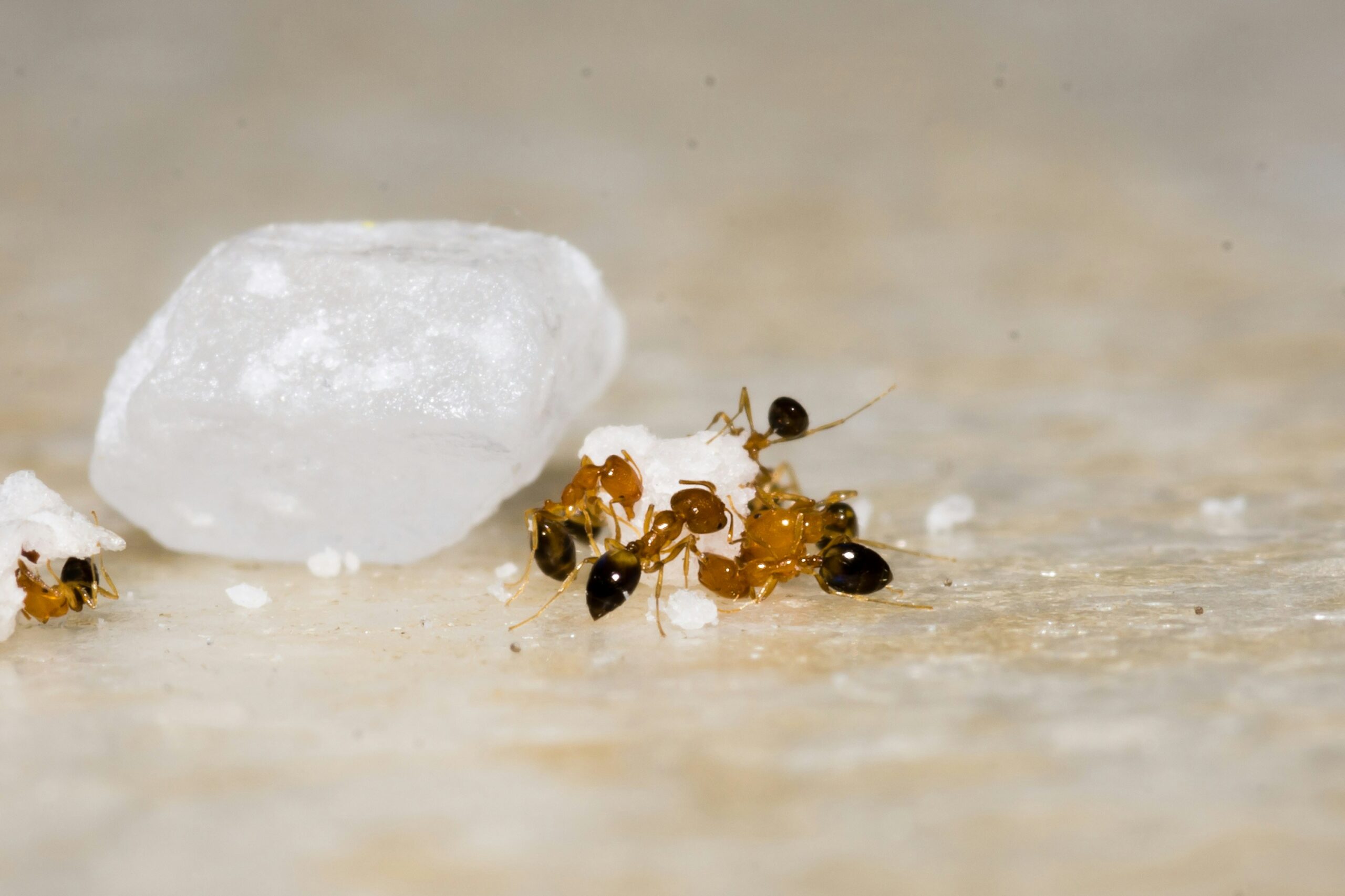
It starts with a couple small ants around the sugar jar and appears to be no big deal. The next minute there are ants around the sink, across the counter, around the cat food and on the windowsill.If you’re wondering how to get rid of sugar ants, the most useful answer is not simply to kill the ants you can see. Household ant control works better when you address what attracted them, how they are entering, and where the colony is located.
Typical nuisance ants trace chemical trails from prior trips made by other ants after a discovery is made. So removing those ants and that trail may only be a short term fix. The recommended strategy from Pennsylvania State University Extension is to first identify the ants, remove any sources of food and water they are utilizing, seal off any point of entry, and use pesticides and other controls as a part of integrated pest management.
The distinction is important because if that’s the colony responsible, those ants out on your counter are likely just the foragers. Control involves breaking the link between the colony, entry to the home, and what is inside.
Why Sugar Ants Keep Coming Back
This is an informal term given to small ants that love sugary items. It is not a classification of a single species that is found everywhere. Several different nuisance ant species behave in the same manner and have similar tendencies for nesting locations and food preferences.
That is why properly identifying the ant before applying a pesticide or bait can make a difference. Identifying the particular ant species present may help in its nesting habits and favorite foods, according to University of Minnesota Extension.
Though it may be something visible such as spilled juice, sugar, honey, fruit or crumbs, grease, protein, pet food, water, or food particles are also known ant attractants. EPA recommends that you first addressfood, water, and shelter before using a pesticide immediately.
This is probably where the common occurrence comes from where a homeowner cleans out a visible ant infestation and yet another line comes out the next morning. There is no reason why the colony would stop having workers go into the house if the food source and entrance route are still available.
How Ant Trails Lead You to the Problem
If the ants are traveling in a relatively defined line, do not spray them at once. First identify the line.
The trail may go under a cabinet, through a gap around a window, over a base board, under a large appliance, or through a gap around plumbing. Follow the trail to identify what is attracting the ants, and the direction of travel.
Ants send trails of chemicals along to their nestmates. Once a worker finds a food source valuable enough to be used again, other ants can follow the established trail. Pennsylvania State University Extension specifically recommends following lines of indoor ants to identify what attracts them, as well as where the pests are entering.
This makes the trail useful information rather than merely an annoyance.
What to look for
Check areas around:
- Kitchen counters and cabinets
- Sinks and plumbing penetrations
- Windows and doors
- Pet food bowls
- Trash and recycling containers
- Pantry shelves
- Houseplants
- Baseboards and wall cracks
- Leaky faucets or pipes
You do not necessarily need to find the nest immediately. Establishing where the ants are traveling can be enough to begin disrupting the infestation.
How to Get Rid of Sugar Ants Step by Step
The most reliable approach combines several relatively simple measures rather than depending on one treatment.
1. Remove the Food That Attracted Them
Begin with the most basic question: what are the ants eating?
Wash down countertops, tables, floors, cabinet edges, and any other surfaces where food residue may remain. Be sure to scrub sticky spills such as syrup. Even a small bit of liquid and several crumbs are often enough for active foragers.
Store foods like sugar, honey, cereal, baked goods, and other delicacies in secure containers that may be sealed. Proper food storage and cleaning of spills and crumbs are the foundation of successful pest control, according to the EPA ant-management guidelines: “Keep foods such as sugar, honey, cereal, baked goods and other items that attract pests in securely sealed containers, and clean spills and crumbs as soon as they occur, to remove easily available sources of food and water.”
Even pet food can be an easily accessible food source for ants, especially if the bowl is left open and full all day.
Even recyclables can contribute to the problem. Jars of drinks or canned items and containers in the recycling can contain enough residue to attract ant foraging. Before placing such items in the recycling bin, be sure to rinse them, as the EPA ant-management guidelines suggests.
2. Eliminate Moisture Sources
Food is not always the reason ants enter a house.
Moisture attracts specific areas such as under sinks and plumbing, near the outside and around condensation, plant containers and any leaks. Ensure there is no excessive dampness in these locations, or under your sinks and around any leaking faucets or plumbing (if fixable). Make sure to thoroughly address areas wherever water is prone to get, and or where moisture- damaged materials might linger. EPA recommends addressing leaks along with any sources of dampness through integrated pest management.
3. Clean the Ant Trail
Once you have identified the route, clean the surface thoroughly.
Soapy water wash can do much to destroy the chemical trail ants are treading. Some of this trail can be temporarily confusing to ants using even a dilute vinegar solution as well, according to University of Minnesota Extension.
The key word is temporarily.
Removing access to a trail, though it removes an entryway to the route, doesn’t eliminate the colony. If there’s food to be collected or access from a different entrance, ants will simply forge another pathway.
4. Seal Their Entry Points
After observing where ants enter, look for small gaps around:
- Window frames
- Door frames
- Baseboards
- Pipes
- Utility lines
- Cracks in walls or foundations
Filling proper cracks and holes ensures ants use different routes to travel your home! “Fill cracks in foundations and wall damage from water,” Pennsylvania State University Extension advice regarding ant control.Apply caulk around doors, windows, and pipes to seal potential entry points.This is an oft missed, essential portion of any pest control effort; the solution does little to actually stop them entering if they are simply entering the SAME hole and travelling SAME pathway.
5. Use Ant Bait When Appropriate
Ant baits can be helpful if ants return even after sanitation and exclusion, as they act colonywide, rather than to just to foraging ants found inside, making them an important part of household pest control. According to the University of Minnesota Extension, the foraging ants feeding on bait also can take some bait back to the colony to share it with others. The only workers foraging outside the nest at any one time represent a small fraction of the total ant population.
That is why bait and spray serve different purposes.
A contact spray can kill ants you see. A suitable bait can potentially reach ants you do not see.
Don’t expect bait to work instantly
One common mistake is placing bait down and then removing it because ants appear to be feeding on it.
Some ant baits are intentionally slow acting. The delay gives workers an opportunity to transport the bait to the colony. The exact effectiveness depends on the ant species, bait formulation, placement, and environmental conditions.
Only use products that are labeled for the pest and area you intend to treat.Follow the product label exactly, particularly around children, pets, food-preparation areas, and other sensitive locations.
6. Avoid Spraying Ants Around Bait
Killing the worker by spraying insecticide directly around active bait stations can be counterproductive to the overall purpose of utilizing bait. If the workers are being prevented from encountering and taking the bait by the presence of spray around the stations, the baiting strategy will be significantly less effective. The EPA also promotes the use of Integrated Pest Management strategies and selecting the best control method to use that is both effective and also poses minimal risk to humans.
7. Address Outdoor Sources
Indoor ant activity can sometimes originate outside.
Inspect around the foundation, patios, around the windows, landscaping, mulch and other areas near the structure. Ants use branches or plants growing onto the house to access the building and travel to entrances. Pennsylvania State University Extension suggests moving vegetation and mulch away from the foundation, and trimming branches and shrubs that contact the house.
EPA guidance on ants also recommends keeping the vegetation near the structure trimmed back, and providing conditions away from the house that would support ants with moisture.
It is not necessary to get rid of all the ants in the yard, but rather remove some of the avenues and conditions that will attract them into the building.
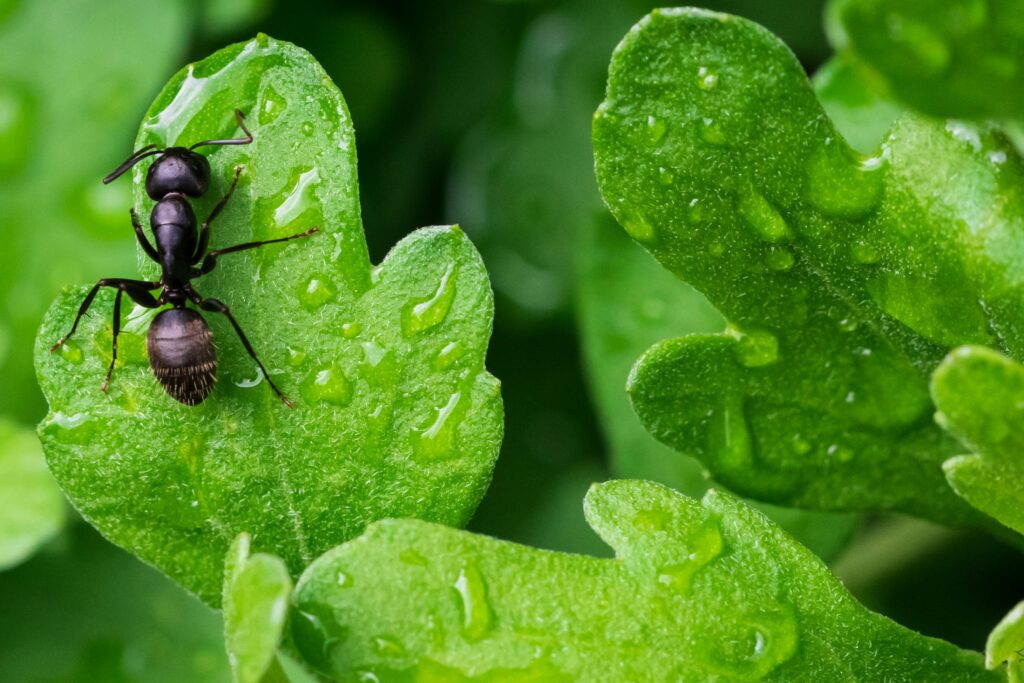
Why Killing Every Ant You See Isn’t Enough
This is perhaps the biggest misconception about household ants.
However, the ants you saw marching across the counter were just part of the much greater system. The nest may be in a wall Void, under the flooring, in an object, Outdoors beneath flooring or in another private space depending on your species of ant. To kill an actively marching worker may Not impact the nest “at all” States University of Mn extension; instead treat the actual Nest through a form of treatment that can or may involve baiting. But of course killing the Foraging Ants should still be done as it is Part of a control strategy.
Common Mistakes That Make Ant Problems Worse
Using too much insecticide
More pesticide does not always mean better pest control.Over application may lead to unnecessary exposure not targeting the problem (colony).
Integrated Pest Management: Prevention is key. It requires monitoring, physical exclusion, sanitation, biological and targeted control, rather than application of pesticides routinely.
Leaving food accessible
Even a clean-looking kitchen can contain hidden sources of tiny food particles.Crumbles under the dishwasher, recycling Bin debris, Pet Food debris and tacky surfaces.
Ignoring water leaks
For example, an ant infestation near a sink or plumbing area doesn’t necessarily mean it’s because of sugar – you’ll want to check for leaks.
Destroying an active bait placement
If the bait you selected has enticed ants, a direct spray applied while they’re actively foraging may prevent them from carrying the bait back to their colony.
Assuming every small ant is the same
Small ants can belong to different species, and species can differ in nesting habits and food preferences. Identification becomes especially important when ordinary measures fail.
When Homemade Remedies Help—and When They Don’t
Household solutions such as mopping paths with soapy water or a vinegar-and-water solution can disrupt what appears to be going on. It’s suitable for cleaning purposes or for preventing ants temporarily from use of a trail you don’t wish them to use. These methods,however,should not be confused with colony eradication .
Cleaning spray or spray does not necessarily go down a trail to the nest .
Likewise, a pungent smell may temporarily change their behavior but won’t address the reason they are present in the first place.For ongoing infestation, sanitation ,exclusion, baited specifically for the particular species ,and monitor should typically prove to provide more complete control of problem ants.
A Better Way to Think About Ant Control
The most useful shift is to stop asking only, “How do I kill these ants?”
Ask four different questions:
What are they eating?
Where are they entering?
Where might they be nesting?
What conditions are allowing them to return?
Those questions turn an irritating trail of ants into a solvable pest-management problem.
This policy reflects the general philosophy of integrated pest control, where inspections, identifications, monitoring, unfavorable condition creation followed by appropriate control methods would be implemented when indicated.
When Professional Pest Control Makes Sense
You might need a professional assessment if ants keep invading your home even after you’ve tried all control measures and ant control and sealing of outdoor routes to entry into your home, or if it’s not clear what is attracting the ants or where their nests are located. Also consider a professional if you think you have anything other than the common nuisance ant. Different ant species respond to a different treatment program so using pesticides to control the ants can do nothing in you do not have them identified accurately.
If you opt to use an insecticide be sure to use it only for what it says on the label.
As the EPA noted recently, any pesticide use must be thoughtful and other less harmful and preventive means of controlling the population should be exhausted prior to resorting to pesticides.
Conclusion
Knowing how to get rid of sugar ants is less about finding one powerful spray and more about breaking the cycle that keeps bringing them indoors through effective pest control methods. To get started, you can first take away the source of food and moisture. Maintain existing ant trails that can’t be easily discouraged, seal entry points that you may discover or at minimum seal any suspected entry points. Then, choose appropriate ant baits as active as you are still seeing activity.
Outdoor foliage, leaks, indoor recycling receptacles, pet food, small cracks, and so forth might all continue the infestation at a very low level.
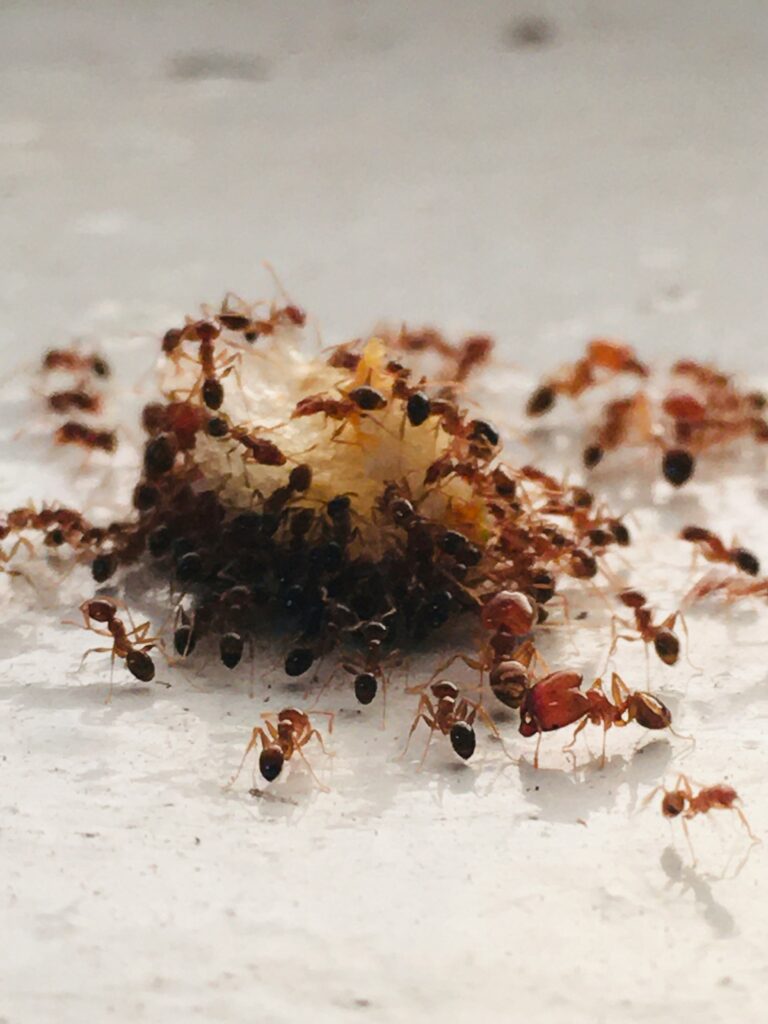
The overall message is that the active ants will most probably simply present to us a small portion of your actual threat. Ongoing treatment, instead relies heavily upon addressing the problem conditions supporting the colony, and keeping new staff away from discovering the exact conditions.
Frequently Asked Questions
1. What is the fastest way to get rid of sugar ants?
First step is to get rid of the food or moisture that attract them along with cleaning up the trails left behind from ants, next step if that activity still carries on would be to have an ant bait designed for the specific purpose for that colony of ants and not just of the workers.
2. Why do sugar ants keep coming back after I spray them?
Sprays may kill visible workers without eliminating the colony. If food, water, and an entry point remain available, new workers can continue entering the home.
3. Should I clean up ants before using bait?
Ensure food competition has been removed as well as maintaining high sanitation, just don’t taint the bait area or spray on the bait placements if you have a current one out. We want a bait that scouting ants can access and carry back to their colony.
4. Where do sugar ants usually enter a house?
They can enter through small cracks and openings around windows, doors, pipes, foundations, and other structural gaps. Following an ant trail can help reveal the specific entry point.
5. Does vinegar kill sugar ants?
Vinegar may help erase ant trails, but it generally won’t eliminate the entire colony.Its primary benefits are to confuse foraging pathways for short periods of time.
6. How long does it take to get rid of an ant infestation?
There is no set schedule; all is dependent upon the specific ant species, the nest site, food availability, ant attraction to the bait and successful exclusion. Constant activity call for another inspection not an additional spray.
7. When should I call a pest professional?
These are circumstances where you may want to enlist professional help: if ants persist in returning even after you have taken sanitation and exclusion measures, if the nesting area seems to be located within a wall void, or if you cannot be certain of the species.