Your windshield doesn’t have to appear dirty to impact your driving. Even when your glass seems clean to your eyes, layers of dust, body oils, smoke, and chemicals secreted by the interior of your car slowly form on the inner side. This film of unseen dust deflects sunlight, results in glare in the morning and evening sun, and creates a hazard during night drives.
Drivers sometimes scrub and clean their external windscreen – and the interior and subsequently, after driving into the early morning sun or into a rainy drive home after the rain has finished – it is time for some more cleaning because all of the streaks were missed the first time.Understanding the best way to clean inside windshield glass isn’t just about appearance—it directly improves visibility and overall driving safety.
Here’s why your windshield gets gross on the inside in the first place, what cleaning methods really work, what mistakes cause that irritating streaky residue, and how you can keep your windows looking great longer.
Why You Should Clean the Inside of Your Windshield Regularly
The interior surface of your windshield collects contaminants during every drive.
These include:
- Dust circulating through cabin air
- Oils transferred from fingers
- Smoke residue
- Pet hair and dander
- Vapors released from dashboard plastics
- Air freshener residue
- Moisture that traps airborne particles
The contaminants gradually stick together to create a layer which we can see most plainly on bright, sunny day or when a driver’s headlight’s hit straight towards us on a clear night.
A clean windshield offers several important benefits:
- Better visibility during day and night
- Reduced glare from headlights
- Faster windshield defogging
- Cleaner appearance inside the vehicle
- Less eye strain during long drives
Many professional detailers consider interior windshield cleaning one of the most overlooked aspects of vehicle maintenance.
Why the Inside of a Windshield Gets So Dirty
Many people assume the dirt comes from outside, but most interior windshield haze develops from inside the cabin.
Outgassing From Interior Plastics
One of the biggest contributors is a process called outgassing.
The plastic elements within the interior of the dashboard, the door panels, vinyl trims, as well as a host of different plastic and composite parts gradually release sub-microscopic volatile gases. The increased summer heat leads to these escaping vapors settling on the cooler surface of the windshield, which builds up into a film of grease like matter. A newly introduced vehicle is likely to emanate far more gas into the cabin in the first couple of years on sale.
Dust Circulation
Even clean vehicles accumulate airborne dust.
Every time you:
- Open the doors
- Turn on the air conditioner
- Use the heater
- Drive with windows open
fine particles circulate throughout the cabin before eventually settling on glass.
Body Oils
There’s a good chance you touch the windshield any time you: – clean – adjust – attach parking passes When you do so, you’re leaving natural skin oils. Because these oils can easily collect dust and are the origin of most hard-to remove streaky lines, they can become a problem spot for your windshield.
Cigarette or Vape Residue
Smoke particles leave residue on glass surfaces quickly.
This buildup leaves behind a dingy, yellow film, which usually will not come off easily using only water. Nicotine films will have to be cleaned with glass cleaner- multiple times!
Moisture and Condensation
When humidity builds inside the vehicle, condensation forms on the windshield.
As the moisture evaporates, it can leave behind minerals and dirt that contribute to cloudy glass.
What You’ll Need Before Cleaning
The best results come from using the right materials rather than excessive force.
Professional detailers typically recommend:
| Item | Purpose |
| Microfiber cloths | Lift dirt without scratching glass |
| Automotive glass cleaner | Removes oils and residue |
| Distilled water | Prevents mineral spots |
| Isopropyl alcohol solution | Cuts greasy film |
| Reach-and-clean windshield tool | Helps reach lower corners |
| Dry microfiber towel | Buffs away streaks |
Avoid paper towels whenever possible because many leave lint behind and may smear residue across the glass.
Best Way to Clean Inside Windshield Step by Step
Cleaning interior glass isn’t difficult, but technique makes a significant difference.
Step 1: Park in the Shade
Direct sunlight speeds up evaporation, making cleaning solutions less effective.
When cleaners dry before being wiped away, streaks become much more likely.
Choose:
- A garage
- Covered parking
- Early morning
- Late afternoon
Allowing the glass to cool before cleaning makes the job easier.
Step 2: Remove Loose Dust First
Before using any liquid cleaner, wipe the windshield with a clean dry microfiber cloth.
This removes loose dust that could otherwise spread into muddy streaks once moisture is introduced.
Professional detailers almost always perform this dry wipe first.
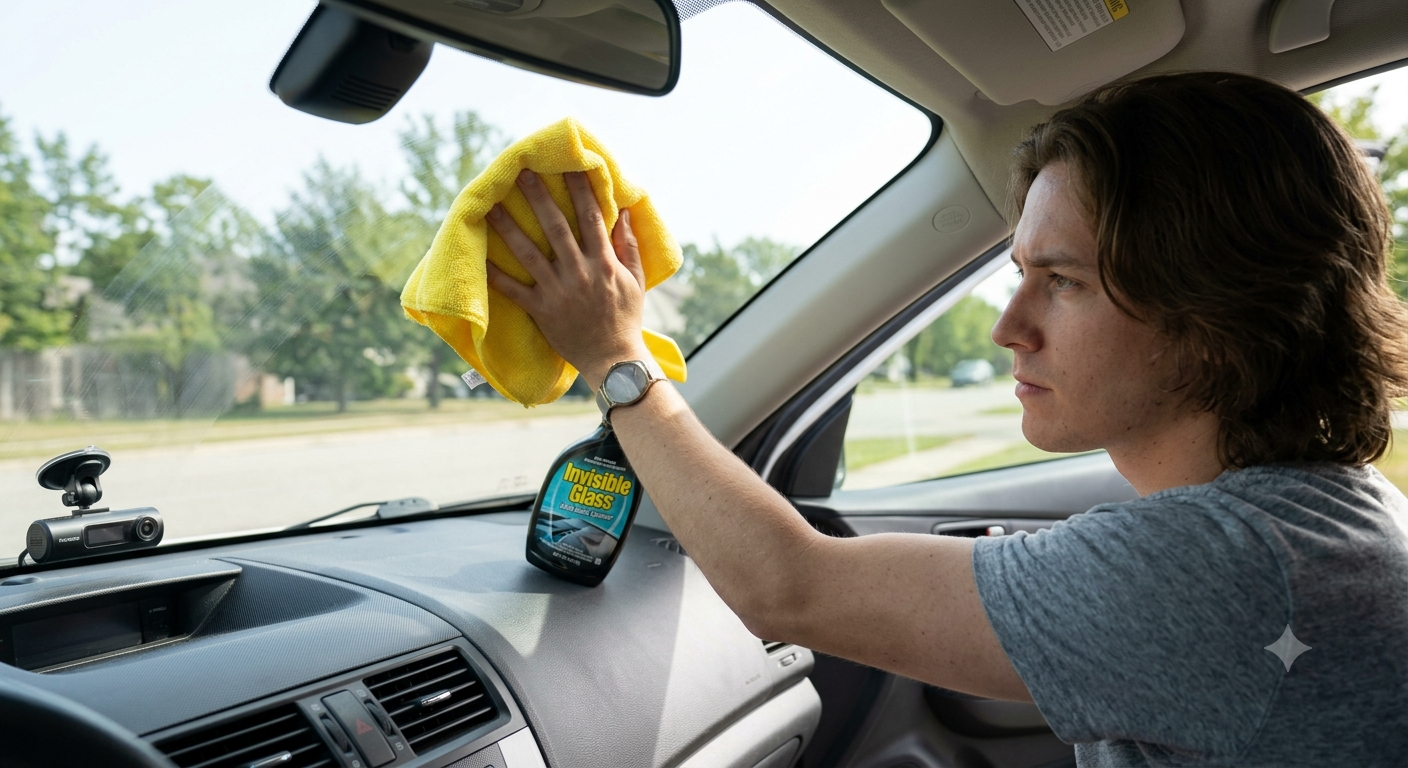
Step 3: Spray the Cloth—Not the Windshield
One of the most common mistakes is spraying cleaner directly onto the glass.
Instead:
- Spray onto the microfiber cloth.
- Use moderate amounts.
- Avoid soaking the towel.
This prevents overspray from reaching:
- Dashboard electronics
- Instrument panels
- Navigation screens
- Leather trim
- Fabric upholstery
Step 4: Clean in Overlapping Sections
Rather than wiping randomly, divide the windshield into manageable sections.
Work:
- Left to right
- Top to bottom
- Using overlapping motions
This ensures every area receives equal attention and reduces missed spots.
Step 5: Change Cloth Sides Frequently
As dirt accumulates on the towel, it simply redistributes residue.
Fold your microfiber cloth into multiple clean sections.
Switch to a fresh side whenever one becomes visibly dirty.
Professional auto detailers often use two or even three cloths for a single windshield.
Step 6: Buff With a Dry Microfiber Cloth
Immediately after cleaning, dry the surface with a separate microfiber towel.
Buff gently using circular or cross-hatch motions until the glass appears perfectly clear.
This final polishing step removes the microscopic moisture responsible for streaking.
Choosing the Right Cleaner
Not every household glass cleaner is ideal for automotive interiors.
Different products work better depending on the type of contamination.
Commercial Automotive Glass Cleaner
This cleaner is created with your specific automotive glass in mind. Removes fingerprints, light grease and routine haze, all without streaking. Works great for basic cleaning.
Isopropyl Alcohol Mixture
Many detailers recommend a blend of isopropyl alcohol and distilled water because it effectively removes the oil residue left behind by dashboard outgassing.It dries reasonably fast without residue if used sparingly.
Distilled Water
For lightly dusty windshields, distilled water alone may be enough.
Unlike tap water, it doesn’t contain minerals that can leave spots after drying.
Vinegar Solution
A diluted white vinegar solution can cut through stubborn residue and smoke film.
However, because of its odor, many drivers reserve this option for occasional deep cleaning rather than routine maintenance.
Products to Avoid
Some cleaning products may seem effective initially but can create long-term problems.
Avoid using:
- Ammonia-based cleaners on tinted windows
- Abrasive scrubbing pads
- Rough paper towels
- Silicone-based cleaners
- Household degreasers not intended for automotive glass
Using the wrong product may damage window tint, leave residue behind, or increase streaking rather than eliminate it.
Step-by-Step Methods for the Best Way to Clean Inside Windshield
Once you understand why the inside of your windshield becomes dirty, the next step is choosing the right cleaning method. The best way to clean inside windshield surfaces is not about using stronger chemicals—it is about using the proper tools, technique, and finishing process to eliminate haze without leaving streaks behind.
Gather the Right Cleaning Supplies
Professional detailers get a streak free shine through using specialized tools not that cloth in a drawer.
You’ll need:
- Two clean microfiber towels (one for cleaning and one for buffing)
- An automotive glass cleaner or a homemade vinegar-and-water solution
- Distilled water (to avoid mineral spots)
- An extendable windshield cleaning tool (optional but helpful)
- Isopropyl alcohol for stubborn oily residue
- A spray bottle
Avoid paper towels whenever possible. They tend to leave lint behind and may smear oils across the glass instead of lifting them away.
Step 1: Park in the Right Environment
Temperature has a surprising effect on glass cleaning.
Park your vehicle:
- In the shade
- Inside a garage
- When the windshield is cool to the touch
Cleaning hot glass causes cleaning solutions to evaporate almost instantly, creating streaks before you have time to wipe them away.
Step 2: Remove Loose Dust First
Before spraying any cleaner, wipe the windshield with a dry microfiber towel.
This removes:
- Loose dust
- Hair
- Pollen
- Fine debris
Skipping this step can cause dirt to mix with your cleaner, making it harder to achieve a spotless finish.
Step 3: Apply Cleaner to the Cloth—Not the Glass
Lots of us simply blast cleaner onto our windshield. If this doesn’t appear right away, you’ll soon see spray in areas such as your navigation system, upholstery, electronics, and your dashboard.
Instead:
- Spray cleaner onto the microfiber towel.
- Wipe the windshield using overlapping motions.
This approach gives you better control while reducing waste and preventing damage to interior materials.
Step 4: Clean Using Overlapping Patterns
Rather than wiping randomly, work methodically.
Many professional detailers recommend:
- Horizontal strokes on the inside
- Vertical strokes on the outside
Once you have finished, if you have streaks, it’s easy to spot which part of the pane needs more cleaning. Begin at the top corners and work downwards, making sure that there is a bit of overlap each time you move across the pane.
Step 5: Buff Immediately with a Dry Microfiber Towel
This is the step many people overlook.
After cleaning:
- Switch to a completely dry microfiber cloth.
- Buff the glass until it feels smooth.
- Continue until no visible haze remains.
Buffing removes leftover moisture and prevents drying marks that become noticeable in bright sunlight.
How to Reach Difficult Areas
Modern windshields are steeply angled, making the lower corners difficult to clean.
Helpful techniques include:
- Sitting in the passenger seat while cleaning the driver’s side.
- Using the back of your hand for better reach.
- Employing an extendable windshield cleaning tool with a microfiber cover.
These tools reduce strain while ensuring complete coverage.
Homemade vs. Commercial Glass Cleaners
Many drivers wonder whether homemade solutions work as well as store-bought products.
Here’s a practical comparison:
| Feature | Homemade Vinegar Solution | Automotive Glass Cleaner |
| Removes fingerprints | Yes | Excellent |
| Cuts oily residue | Moderate | Excellent |
| Safe for tinted windows | Depends on ingredients | Usually yes (check label) |
| Cost | Very low | Moderate |
| Leaves streaks | Possible if mixed incorrectly | Less likely |
| Strong odor | Vinegar smell | Usually mild |
Both options can work well. However, cleaners specifically formulated for automotive glass are often better at dissolving the thin oily film created by plastics and interior materials.
How to Remove Stubborn Windshield Film
Sometimes ordinary cleaning isn’t enough.
If the glass still appears cloudy, you’re likely dealing with a bonded film rather than loose dirt.
Use Isopropyl Alcohol
A cloth lightly dampened with 70–90% isopropyl alcohol can dissolve greasy residue left by dashboard off-gassing.
Afterward:
- Wipe with alcohol.
- Clean again using glass cleaner.
- Buff dry.
Repeat if Necessary
Heavy buildup may require two or three cleaning cycles before the windshield becomes perfectly clear.
Patience often produces better results than stronger chemicals.
Cleaning Tinted Windows
10 Simple Do it-yourself Window Tint Cleaners if Your car has Aftermarket Window Tint Buy Safe Products Steer clear from cleaners with ammonia, such as Windex, as ammonia can take down on some kind of tint, causing your windows to fade and bubble over years.
Instead, use:
- Ammonia-free automotive glass cleaner
- Distilled water
- Mild vinegar solution (only if compatible with your tint manufacturer’s recommendations)
Always check your tint warranty before using homemade cleaners.
Common Mistakes That Leave Streaks Behind
Many people believe they’re cleaning correctly but unknowingly create more haze.
Some of the most common mistakes include:
Using Fabric Softener–Coated Towels
Microfiber towels washed with fabric softener lose much of their cleaning ability and may leave residue on glass.
Wash microfiber separately using fragrance-free detergent and avoid dryer sheets.
Cleaning in Direct Sunlight
Heat causes cleaner to dry too quickly, leaving mineral deposits and streaks behind.
Using Too Much Cleaner
More product doesn’t mean cleaner glass.
Excess liquid often spreads contaminants instead of removing them and requires additional buffing.
Reusing Dirty Towels
A microfiber towel saturated with dirt and oils simply redistributes grime across the windshield.
Use fresh towels whenever possible.
Forgetting the Final Polish
The last dry wipe often determines whether the windshield looks merely clean or professionally detailed.
FAQs
1. What is the best way to clean inside windshield without leaving streaks?
The best way to clean inside windshield surfaces is to use two clean microfiber cloths and an alcohol-based automotive glass cleaner or a 50/50 mixture of distilled water and isopropyl alcohol. Wipe in one direction with the first cloth, then buff with a dry microfiber towel to remove any remaining streaks.
2. Why does my windshield keep getting hazy on the inside?
A streaky coating most commonly is the result of off gassing plasticizers from dashboard components, dust, oils (from your fingertips, cooking oil particles, and tobacco smoke that seep into the car), and water vapor from areas with high humidity. Keeping up with cleaning your interior and ensuring your cabin filter isn’t filthy can minimize its formation.
3. Can I use household glass cleaner on my windshield?
It depends what type of product you’re using. Most of the time, you can safely use an ammonia free household glass cleaner on your car windows. Do not use cleaning products that contain ammonia on automotive glass because they can ruin tints and some dashboard surfaces.
4. How often should I clean the inside of my windshield?
Unless you have specific reasons to do so, cleaning the inside glass every four to six weeks is typically recommended. Driving through sandy areas, smoking in your car, bringing pets along, and night driving with significant glare might warrant an inner cleaning every two to three weeks.
5. Why are streaks more noticeable at night?
Tiny amounts of residue light up and scatter the rays from headlights, traffic signals, and other artificial lights. While this film is easy to ignore in daylight, safety studies show that glare and reduced visibility during night driving significantly slow down reaction times when spotting hazards
6. Is vinegar better than alcohol for cleaning auto glass?
Either of these can do the job, but with alcohol, it evaporates more quickly, and usually creates less streaky, more evenly cleared glass. Vinegar is good for more heavy-duty mineral deposits, or the more grungy grime, though admittedly, not everyone loves that smell. No matter what you’re using for a solvent, make sure to clean with a solution containing mostly distilled water, to make sure you don’t end up with water spots.
7. Can dirty interior glass affect driving safety?
You can. Dust on your windshield also lessens the contrast, increases the glare and haze from sunlight and oncoming cars’ headlights and makes it harder to see through and perceive hazards as clearly, particularly during rain.
Conclusion
Finding the best way to clean inside windshield isn’t about buying the most expensive cleaner—it’s about using the right technique with the right materials. Most interior haze comes from everyday contaminants like dashboard vapors, fingerprints, dust, and moisture, all of which can be removed effectively with a quality microfiber cloth and a safe glass-cleaning solution.
Every time you hit the road, those few extra minutes spent carefully cleaning the inside of your windshield will yield visible dividends. The view out your front window will be crisp and clear, glare will be significantly reduced in the early morning and while driving at night, and the whole interior will feel more fresh and clean. More to the point, timely cleanup ensures that a hardened film never takes hold which saves a whole lot of effort for next time.
More Than Just Shine Pairing inner glass care with simple tasks like replacing a weak key fob battery keeps your entire vehicle running smoothly and improves your visibility in any season. Your clean windshield is not simply for driving that seems great; it actually contributes to secure driving. Keep interior vehicle windows cleaning as part of of one’s daily maintenance of auto to achieve a clearer, much more enjoyable view in the street forward.