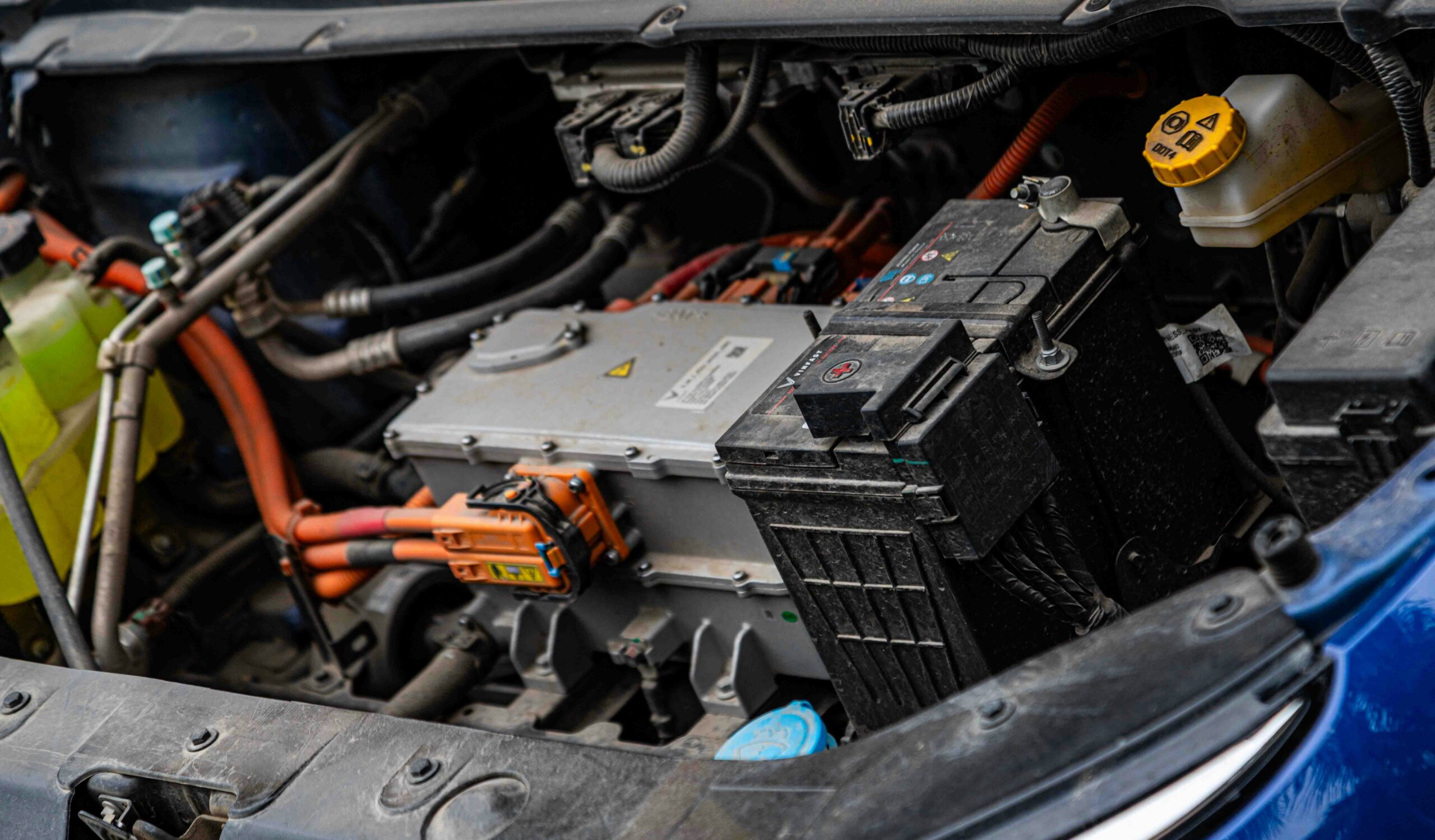
A car battery may look like an ordinary piece of automotive equipment, but its contents can make it a regulated hazardous material during transportation. So, automotive batteries are an example of which hazard class? For a conventional wet, lead-acid automotive battery filled with sulfuric acid, the answer is Hazard Class 8: corrosive materials, making it an important topic in hazardous material transportation. Under U.S. hazardous-material regulations, these batteries are commonly identified as UN2794, Batteries, wet, filled with acid, electric storage.
That answer, however, needs an important qualification. Not every battery found in a modern vehicle belongs to the same hazard class. Traditional lead-acid, non-spillable, and lithium-ion batteries may fall under different classifications and have different transportation requirements. Understanding that distinction is essential for anyone involved in shipping, receiving, storing, recycling, or handling automotive batteries.
The Short Answer: Class 8 for Conventional Lead-Acid Batteries
Most of the time a question asking for the hazard class of “automotive batteries” is talking about a typical wet-cell lead acid battery such as those commonly found in gasoline powered cars. Sulfuric acid, an electrolyte material found in the wet-cell battery, causes damage and is corrosive, therefore classified for shipping purposes according to transportation hazard classes. Class 8 corresponds tocorrosive substances among DOT hazard classes.
For example, the Environmental Protection Agency (EPA) classifies automotive batteries as Class 8 corrosive hazardous materials, which must be shipped and handled in accordance with Department of Transportation (DOT) requirements.
A standard designation for a wet, lead-acid automotive battery is UN2794; the UN2794 is listed as Class 8 with proper shipping namebatteries, wet and acid-filled within the federal Hazardous Materials Table. A wet lead-acid auto battery is a “corrosive” hazard rather than a “lead” hazard because of its electrolyte.
Why Is a Lead-Acid Battery Considered Corrosive?
Chemical considerations within a traditional lead acid battery account for this classification. Typical battery components include leads and an electrolyte, sulfuric acid. Under normal use, a battery can store and discharge electric energy as through electrochemical processes. In these circumstances, an electrolyte remains safely inside the battery’s casing.
The risk begins when a battery is somehow broken, mishandled, tipped over, broken, cracked or otherwise fails. This can allow the acid from within the battery to spill. This may come into contact with clothing, Skin, eyes, equipment, etc.
The corrosive nature is also what counts for the transportation classification.
There is one more hazard of note for batteries – electrical short circuits. The terminals of a battery may have great current flowing through it, and when that comes into contact with something conductable, things can go very badly wrong-producing heat, sparks, etc. Due to this, proper battery transport requires the mitigation of both chemical and electrical hazards. The EPA’s recommendations for automotive batteries state “Take special precautions to insulate battery terminals from contact with metallic surfaces”. It specifically states “For damaged or leaking batteries: use adequate spill control for any liquid released.”
What Does Hazard Class 8 Mean?
Hazard classes are used to group dangerous goods according to the primary type of hazard they present during transportation.
Class 8 means corrosive material.
Under applicable regulations, corrosive substances are defined as materials capable of causing chemical reactions that can damage or destroy living tissue.It may also affect various materials and transport containers. When thinking about an auto-lead acid type of battery, use of the Class 8 designation can help shipping workers to realize a leaking or damaged battery type that can present some chemical threat.
And it also affects how it’s going to be moved.
Shipping guidelines may cover any/ all applicable types of packaging, marking, labeling, shipping documents, or handling depending on packaging, size, state and vehicle. So just because you place a battery within a cardboard box will often not, then equip it for shipping.
UN2794 and the Automotive Battery Connection
Perhaps the most informative detail for the interpretation of this problem is the UN number: For acid-type batteries (wet), in the USA this designation is UN2794, to classify material in federal USA hazards -transport tables there- associated with Hazard class 8. The number serves some different purpose than the hazard class designation.
Think of the distinction this way:
- UN2794 identifies a particular regulated material.
- Class 8 identifies the primary hazard category.
- The proper shipping name describes the material for transportation purposes.
- Packaging, marking, labeling, and documentation requirements depend on the applicable regulations and circumstances.
This distinction matters because people sometimes assume that the UN number and hazard class are interchangeable. They are not.
Are All Automotive Batteries Class 8?
No. This is where a simple quiz answer can become misleading in real-world transportation.
For the typical car, the battery found has been a wet lead-acid battery but today batteries can also include li-ion for use inEVs and hybrids. However, not just because it is a battery used for vehicles will make a Li-ion Battery “Class 8” – this can lead to significant safety risks and legal trouble because if handled incorrectly or improperly shipped, Li-ion batteries can cause fires. Typically a Li-ion battery shipped as the regulated as part of the ‘dangerous-goods’ framework under Class 9 as’miscellaneous hazard materials’, although classification ultimatelydependson the type, size, capacity, condition, containment, and transport means.
This distinction is especially important as electric vehicles become more common.
Therefore, the safest way to answer the original question is:
Traditional wet, acid-filled automotive lead-acid batteries are generally Class 8 corrosive hazardous materials.
The word traditional matters.
What About Non-Spillable Lead-Acid Batteries?
Sealed/maintenance-free should not always be considered equivalent to standard spillable wet battery for transportation. Only under certain conditions is a lead-acid battery a non-spillable battery and only under these certain conditions is a particular type of lead-acid battery treated different than the others by transportation authorities. Take U.S. Postal Service, for example: Their guidance refers to “liquid electrolyte,” in which automobile lead-acid batteries are classified as prohibited, and nonspillable (“dry”) lead-acid batteries have certain exemptions when they meets the specific conditions outlined.
What’s a key lesson here? A battery “sealed” is not automatically “non-haz”! You need to analyze construction, and whether it meets regulatory definitions. Don’t assume a battery that boasts the term “maintenance-free” will avoid stringent packaging and declaration regulations.
Why the Classification Matters During Transportation
The reason behind this classification is not an academic exercise. Instead, classification has a very important role – and it dictates how the hazardous material will be handled throughout the transportation cycle. For example, let’s take the case of a warehouse receiving a consignment of car batteries.
Let’s assume that a battery leaks as it travels through the supply chain.
This would be more than just water – the electrolyte contained in it may be corrosive, necessitating certain steps. Similarly, when batteries are shipped from one OEM to another OEM, from OEM to distributor, distributor to repair shop or from either of those destinations to a recycler, classification plays its role.
Correct classification helps determine the applicable:
- packaging requirements
- hazard markings
- labels
- shipping documentation
- handling procedures
- transportation restrictions
- emergency-response information
However the federal regulations may also have exemptions or specific inclusions so that the categorization cannot inform shipping of all aspects of shipping a specific battery. PHMSA’s responses to the questions dealing with UN2794, lead-acid battery shipment and placarding illustrate transportation can get tricky moving batteries through the supply chain:
The Difference Between Hazard Class and Physical Risk
Commonly misunderstood is thinking thehazard classification lists the hazards the product can pose to individuals. That is not the case. A Hazard Class 8 label indicating corrosivity means that’s the transportation-classification hazard of interest; it doesn’t mean the battery has no risks.
Lead-acid batteries carry electrical and safety risks, and a damaged battery may leak or become unstable.
Safety concerns can be posed when batteries are charging as well. That all goes to say: the hazard class is an administrative system, it will not substitute safe-working practices.
What Happens If a Battery Leaks?
An leaking battery must be approached as if it is not already physically damaged or leaking. The EPA advises using sealed, acid resistant plastic containers for storage of cracking or leaking batteries, following basic battery safety practices. The auto battery guidelines from that agency stress secondary containment and safety around the battery storage area.
The proper answer should follow workplace hazardous materials procedure and related laws for what is appropriate.
Do not expect workers to determine how to clean up a leak based solely on its appearance. A battery leak can create both a chemical exposure hazard and a surface contamination risk, so the appropriate cleanup procedure should be based on the material involved and established safety guidelines. Depending on the workplace may indicate need for chemical resistance equipment,Containment of chemical and of hazardous fumes,adequate ventilation, and emergency response.

Why Battery Terminals Also Need Protection
Though corrosion is what puts conventional wet lead-acid automotive batteries in the Class 8 grouping, terminal protection still plays a role when properly shipping the batteries. Because the electrodes will generate excessive heat, it’s important that no conductive material connect the positive and negative electrodes-the potential it created then is used for generating heat and a chemical reaction. When automotive batteries are prepared for shipping, in most instances, precautions must be taken to prevent a short circuit.
Actually, a section on precaution for accidental short circuits when shipping automotive batteries is part of the Environmental Protection Agency (EPA)’s guidance.
So as you can see, packaging your shipment isn’t as simple as assigning a class of dangerous material to your battery; while hazardous, a car battery is an example of a product where the hazardous nature described in the class and those in the package packaging aren’t quite the same.
Automotive Batteries and Shipping Rules
Shipping a battery is more complicated than determining its hazard class, especially when considering broader automotive safety requirements.
Requirements that would apply to a wet lead-acid battery would be contingent on many items, including whether it is spillable, non-spillable, damaged, total count of that item,packaging and method of carriage. Transport on ground and transport by air would not likely even present themselves in terms of equal requirements. Federal regulations also have specific mentions regarding batteries.
This indicates that any shipper packaging shipments identified with a ‘ UN2794’ should note that this indicates you look at the ‘Class 8 ‘ requirement found in the hazardous materials table and look over the applicable battery requirements outlined in 49 CFR 173.159.
That means one should not get to ‘ Class 8 ‘ identification and think you are through!
Common Mistakes People Make
Assuming every car battery is Class 8
By far, the most frequent oversimplification. We think about classic wet lead-acid batteries as being the same classification as these battery products, which fall under Class 8 standards. There are obviously differences in automobile batteries these days however.
Assuming a sealed battery is automatically exempt
Just because a particular item is shipped in a non-Spill or Maintenance Free package as indicated on its box doesn’t automatically mean it doesn’t need classification in order to satisfy transportation regulations for not being likely to spill, it must be classified.
Ignoring battery condition
A normal intact battery and a damaged or leaking battery do not necessarily present the same handling situation.
Treating the UN number as the hazard class
UN2794 is an identification number. Class 8 is the hazard classification. They serve different purposes.
Forgetting short-circuit protection
Even when the primary hazard is corrosivity, electrical safety remains important.
Using ordinary packaging
However, the shipping box can’t be arbitrary. It must be tailored for the hazardous material; you can’t just package your dangerous goods up in a cardboard box and believe you are good to go from a regulatory standpoint.
Lead-Acid Batteries Versus Lithium-Ion Automotive Batteries
It becomes ever more critical to identify differences among battery chemistries as the world moves toward electric vehicles. Gasoline-powered cars typically rely on a relatively small 12-volt lead-acid battery to start the engine and power electrical loads. Electric vehicles, on the other hand, usually employ relatively massive high-voltage lithium-ion battery systems to propel themselves.
These are fundamentally different technologies.
If the battery is a liquid acid one and governed under wet acid, it falls into Class 8. Lithium-ion batteries usually come under Class 9, miscellaneous hazardous material (subject to their transport criteria).
That does not make lithium-ion batteries “less hazardous” in a general sense. It means the regulatory system classifies their transportation hazards differently.
This distinction is particularly important for automotive technicians, logistics personnel, recyclers, warehouse workers, and anyone responsible for moving batteries between locations.
How to Identify the Correct Classification
When handling a real battery, it’s important not to rely solely on its appearance, especially when determining its type, condition, or safety requirements.
Start by identifying the battery chemistry and type. Then check the manufacturer’s safety documentation and transportation information. Look for the relevant UN identification number, proper shipping name, and transportation classification.
For regulated U.S. shipments, the Hazardous Materials Table in 49 CFR §172.101 is an important regulatory reference. Additional requirements may appear in other parts of the Hazardous Materials Regulations.
The manufacturer’s Safety Data Sheet can also provide useful information, but the actual transportation determination should be based on the applicable regulations rather than assuming that one document covers every shipping situation.
For complicated shipments, particularly air transportation or international movement, specialized dangerous-goods guidance may be necessary.
What Workers Should Remember
For people who handle automotive batteries regularly, the most useful lesson is to separate three questions:
What is the battery?
Determine the chemistry and battery type.
What hazard does it present for transportation?
For a conventional wet, acid-filled lead-acid battery, that primary classification is generally Class 8 corrosive.
What rules apply to this particular shipment?
Check the applicable transportation mode, battery condition, packaging, quantity, and regulatory exceptions or special provisions.
This approach prevents a common mistake: assuming that knowing the hazard class automatically answers every shipping question.
Why Accurate Classification Supports Safer Handling
Hazardous-material classifications were developed to give manufacturers, shippers, carriers, warehousemen, emergency personnel, and regulators a common language. If a standard lead-acid automotive battery is properly classified as a Class 8 corrosive, those involved in the transport of the battery know immediately that the liquid corrosive electrolyte in its case is a threat to their person and property. The classification then helps to determine the proper packaging, marking, storage, transportation and emergency procedures for the batteries should something go wrong, as would any such classification. It provides useful information.
Conclusion: Automotive Batteries Are an Example of Which Hazard Class?
So, automotive batteries are an example of which hazard class? If the question is referring to a typical lead-acid wet battery (filled with sulfuric acid) like you’d find in an old fashioned car (often found under the “automotive battery” exemption – check your country or region specific list for full details including any weight or packaging restrictions), the UN designation is UN2794, and it isClass 8.
The only proviso, though, is obviously of course what exactly you would refer to as an automotive battery!
The common, what one might term as automotive, batteries of lead acid (non spillable variety) and indeed a lot of lithium variants and often are handled differently and may not be shipped within the same blanket \”automotive battery\” exemption or in simpler methods of transportation than one can easily ship a Class 8 Corrosive UN2794! So, were you actually to ship any version of car or automotive battery then it is always advisable to know the chemical nature of you battery and request help prior to shipping! Having said this, for a simple question relating to Hazmats then the simple answer has to be this: – it is Class 8 Corrosive UN2794!
FAQs
1. What hazard class is a typical car battery?
A conventional wet lead-acid automotive battery is generally Hazard Class 8, which covers corrosive materials.
2. What is the UN number for a wet lead-acid automotive battery?
Wet lead-acid batteries filled with acid are commonly identified as UN2794 under U.S. hazardous-material transportation regulations.
3. Why are lead-acid batteries Class 8?
Such a cell is fitted with an electrolyte of an acidic nature. The contents might spill or touch individuals or materials, resulting in serious corrosion. Their ability to corrode underlies their Class 8 designation.
4. Are lithium-ion car batteries also Class 8?
Generally no. Lithium ion vehicle batteries are often subject to Class 9 however particular regulations depend on battery.
5. Is a maintenance-free battery automatically non-hazardous?
No. If it just states that it is “maintenance-free” or “sealed,” it is not automatically eligible for any particular transportation exemption. Consult with applicable regulatory guidance to determine compliance.
6. Can a damaged automotive battery be shipped normally?
For defective or leaking batteries one must take precautions. It is not feasible, for example, to simply package them as intact batteries and ship them out without regard to any regulations.
7. Does Class 8 describe every danger associated with a car battery?
No, class 8 identifies corrosive hazards pertaining to the material being regulated, an automotive battery could pose electrical or short circuit hazards as well.